 Students Incorporated
Creativity
The AI Art Fight a Bangkok Teacher Predicted Isn't Over
In 2023, ICS Bangkok art teacher Jonathan Preg said AI and copyright would end up in court. Three years later, the fight over AI art still isn't settled.
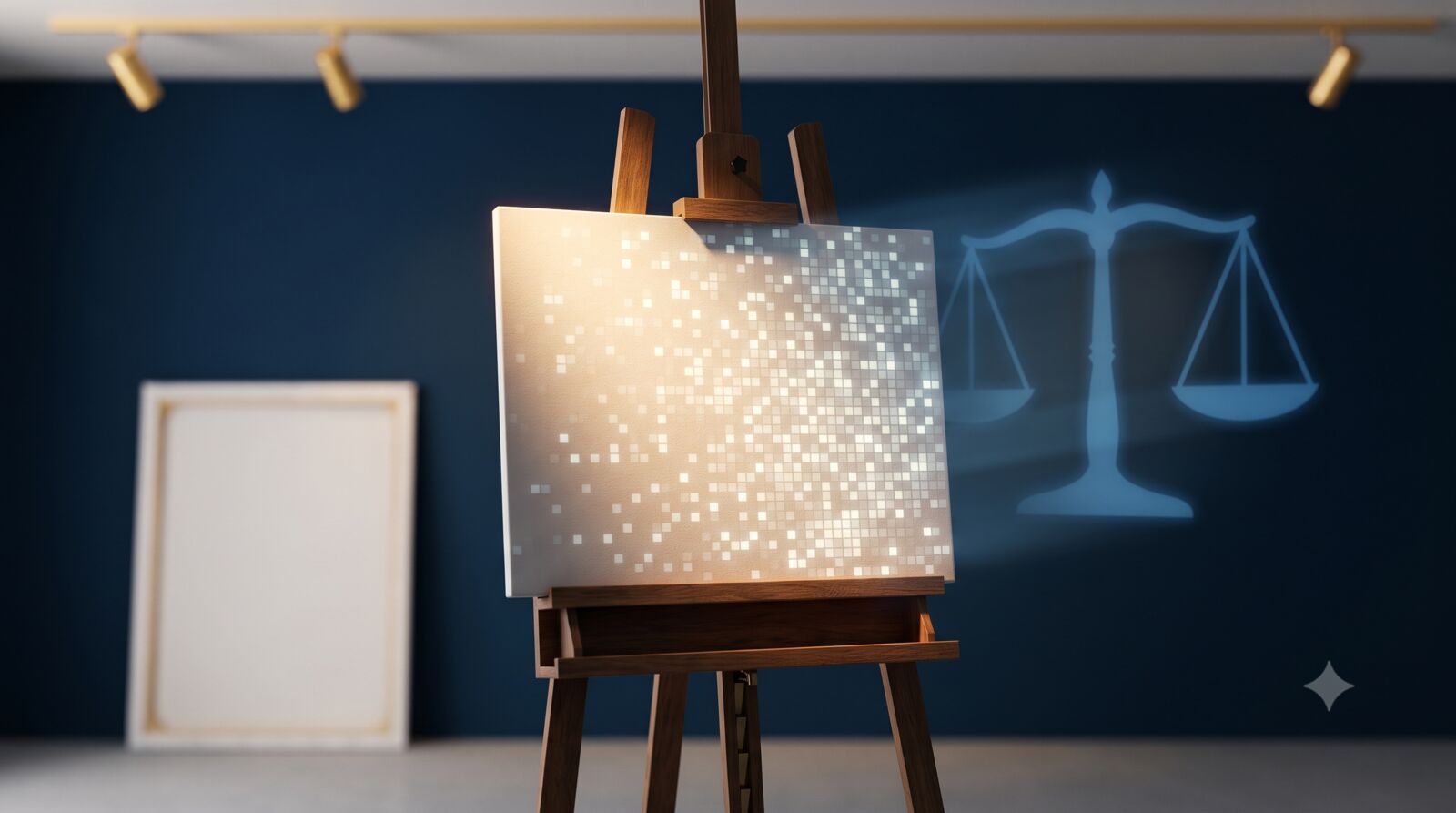
In March 2023, months before any major publisher or artist had filed a landmark case against an AI company, a high school art teacher in Bangkok told his students a legal reckoning over AI-generated images was already underway. Jonathan Preg, who teaches upper-level and AP art at the International Community School (ICS) of Bangkok, said on the Students Incorporated podcast that questions about compensating artists whose work trains AI models were "even going through the US Supreme Court right now." No AI copyright case has yet reached the Supreme Court, but Preg's underlying instinct was right: the fight he described has spent three years spilling across federal courts, a UK High Court trial, and a Copyright Office report, without producing a clear answer.
A Teacher's Framework, Tested by Three Years of Litigation
Preg's argument to his students rested on a historical parallel. Oil painting, he said, was once "the height of technology" for recording the world, until photography took over that job faster, cheaper, and often more accurately. Painting didn't disappear, it changed purpose, freed from the burden of documentation to become something stranger and more personal. He offered that history as a lens for AI-generated art: a new tool that would displace some work while opening space for other kinds of it.
Where he drew a harder line was on the sourcing of the training data itself. "I think it's helpful to remember that that model requires human created inputs, and then it needs human curated prompts to get a meaningful output," he told his student interviewers, before turning to the part that has since dominated headlines: "How did the artwork that went into them get acquired? Was it kind of ethically sourced? And did artists have an opportunity to not be included if they didn't want to be?"
When you have human involvement at the beginning and at the end, then at what point do you say that it's not a human generated artwork?
That question has since been tested in court repeatedly. Artists Sarah Andersen, Kelly McKernan, and Karla Ortiz sued Stability AI, Midjourney, and DeviantArt in Andersen v. Stability AI, a case a federal judge allowed to proceed past an early dismissal motion in August 2024, rejecting the companies' bid to throw out the artists' core copyright claims. According to case-tracking site AI Lawsuit Tracker, the case is now headed toward a September 2026 trial date, with a third amended complaint filed as recently as February. A parallel fight over image licensing, Getty Images v. Stability AI, reached a different milestone in November 2025, when the UK's High Court ruled largely against Getty, finding that Stability AI's model weights don't constitute a "copy" of Getty's photographs under UK law because the model stores statistical parameters, not reproductions, according to law firms Bird & Bird and Mayer Brown. Getty was granted leave to appeal, and its related U.S. case, dismissed and refiled, continues in California federal court.
The clearest sign that Preg's core question remains unresolved came from the U.S. Copyright Office itself. In May 2025, the office released the third and final installment of its "Copyright and Artificial Intelligence" report series, a 108-page analysis of whether training generative AI models on copyrighted work qualifies as fair use. Its answer was not a blanket yes or no: the office wrote that commercial use of "vast troves of copyrighted works to produce expressive content that competes with them in existing markets" goes beyond fair-use boundaries in at least some cases, while declining to say every use fails the test, according to the Copyright Alliance and law firm Skadden. The report carries no binding legal weight, but it is the most direct institutional answer yet to the question Preg raised in a Bangkok classroom: who owns the inputs, and who gets paid for the images they end up in?
The Gallery Math Beneath the AI Debate
Before the conversation turned to artificial intelligence, Preg walked his students through a more familiar economic tension: how galleries actually make money. "The artist takes usually like 40 to 50 percent of the sale and the gallery takes the rest as a commission," he explained, describing that split as payment for exposure and overhead rather than a great deal for the artist. That commission structure has come under its own pressure since, for reasons that echo the AI fight: artists increasingly want more control over who profits from their work. Online platforms such as Artsy, Saatchi Art, and Artfinder now typically take 20 to 35 percent, undercutting the traditional 50-50 split, according to a 2025 breakdown from Empowered Artists, part of a broader shift Artnet News has covered as artists move toward direct-to-consumer sales that cut galleries out entirely.
The stakes are sizeable. The global art market rebounded to an estimated $59.6 billion in 2025, a 4% increase after a 12% drop the year before, according to the Art Basel and UBS Global Art Market Report released in March 2026. The United States remained the largest single market at $26 billion, but dealer costs, including shipping, art fairs, and logistics, rose faster than sales in 2025, and 38% of dealers reported declining profitability even as the overall market grew. That squeeze is part of what's pushing more artists toward the direct sales Preg was gesturing at when he told his students the standard gallery cut wasn't "necessarily the best deal."
What the Career Math Looks Like for Students Now
Preg's advice to students eyeing art as a livelihood leaned on a similar point: the field is broader than the "starving artist" cliché suggests. He named art director as the highest-paying path he'd found researching 2023 salary data, alongside UX designer, multimedia artist, architect, and industrial designer, arguing that visual arts skills now reach into "every industry." Recent labor data backs the range if not always the ranking: Glassdoor and Built In both put average U.S. art director pay around $96,000 to $126,000 for 2025 and 2026, while UX and digital-interface designers cluster closer to $70,000 to $110,000, per Bureau of Labor Statistics figures cited by career-data site CollegeHelpGuide. Preg's advice for students, once they'd picked a lane, was concrete: look up the entry-level job description for that field and tailor coursework to match it, rather than treating "art" as one undifferentiated career.
Two ICS Bangkok seniors on the episode, identified as Spa and Anna, had already made those decisions. Spa was headed to the School of the Art Institute of Chicago for a fine arts degree focused on visual communications and painting. Anna was bound for the Sam Fox School of Design & Visual Arts at Washington University in St. Louis, still weighing how to combine an art major with social work. Both had been making art since grade school, and both described running out of inspiration at times and turning to sources like Pinterest or "the mundane things in life," a candor that matched Preg's own point that professional art is built on discipline as much as flashes of inspiration.
The Banksy Trip That Framed Their Advice
The clearest window into how these students think about art as a business, not just a hobby, came through a field trip. Anna, president of the school's National Art Honor Society and Start With Art clubs, had led roughly 20 people to "The Art of Banksy: Without Limits," an unauthorized touring exhibition that ran at Bangkok's MOCA museum from late October through the end of December 2022, its first stop anywhere in Southeast Asia after visiting 18 other cities and drawing 1.2 million visitors, according to the Bangkok Post and regional outlet The Beat. Anna described Banksy's style as confronting "current world problems" through pieces that looked playful, even amusement-park themed, until viewers registered "the reality of the problems in this world" underneath, and said the exhibit deliberately left interpretation up to whoever was standing in front of it.
That instinct carried into the advice the students gave younger artists: stop comparing your work to other people's. "You can literally throw paint on a canvas and call it art, and people will buy that for millions of dollars," one of them said, framing that not as cynicism about the market but as a case for making work you believe in rather than chasing a formula. It's a smaller-scale version of the same argument now running through the federal courts, where the fight isn't really about whether AI-generated images can be sold, but about who gets a say, and a share, when they are.