 Students Incorporated
Technology
Why Pop Culture No Longer Has One Shared Mainstream
A Students Incorporated panel's trip through five decades of pop culture landed on the same conclusion critics are reaching in 2026: the mainstream is gone.
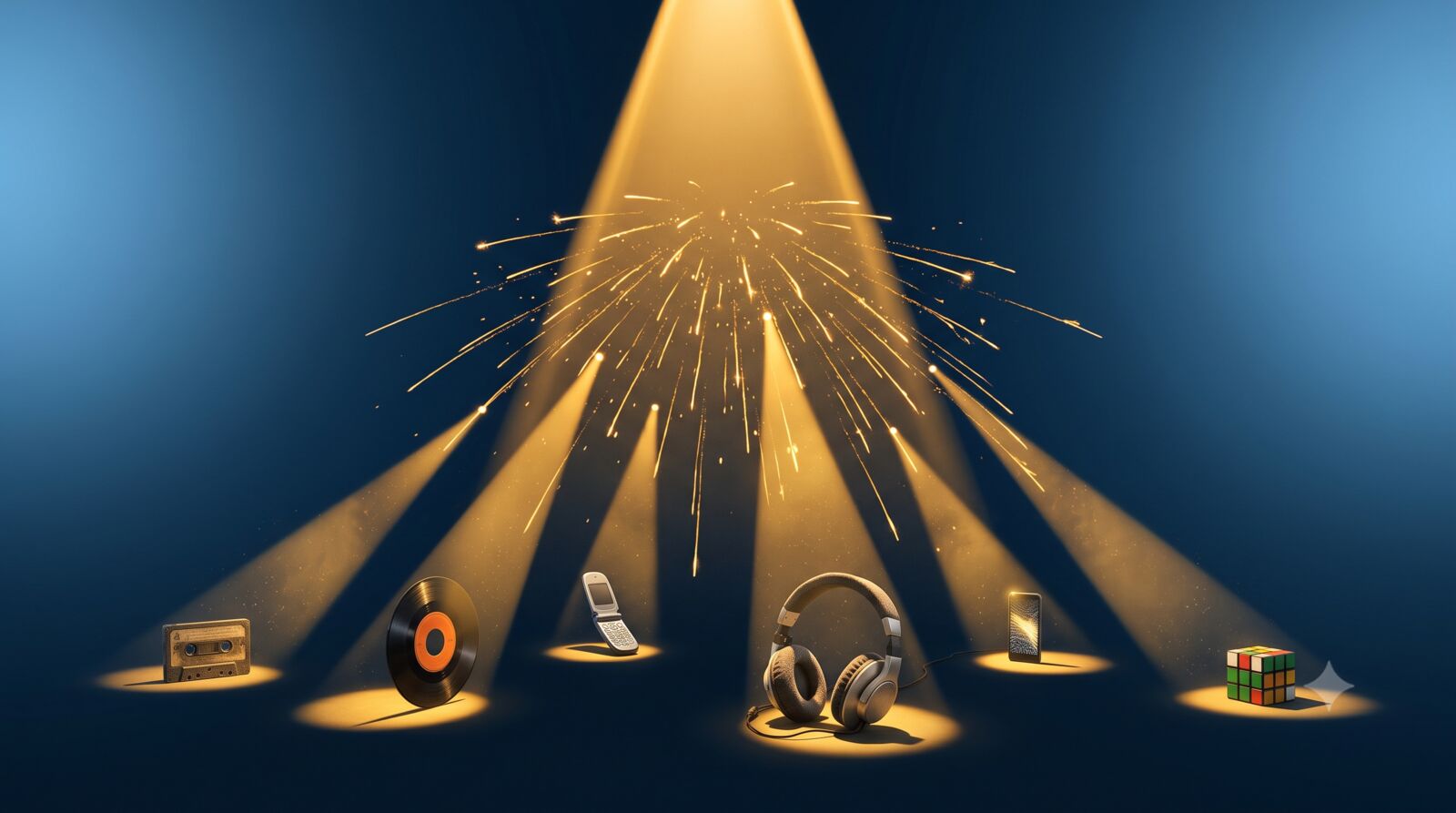
Pop culture no longer has a single mainstream, and a recent episode of Students Incorporated arrived at that conclusion almost by accident. Host Mr. Jason and a rotating cast of co-hosts spent an episode walking through five decades of music, movies, and slang, from bell-bottoms to TikTok, and closed the show predicting that the very idea of a shared pop-culture moment was about to disappear. It already has.
When Everyone Watched the Same Thing
The episode's own decade-by-decade tour doubled as an accidental case study in what a monoculture used to require: one trusted channel at a time. Mr. Jason built each stretch of the show around a single dominant source, the classic-rock-and-disco split of 1970s car radios, the MTV-anointed superstardom of Michael Jackson and Madonna in the 1980s, the network sitcoms of Friends and Seinfeld giving way to the reality-TV wave of American Idol and Survivor by the 2000s. Whether the technology on hand was a Sony Walkman or a dial-up modem, co-host Vanaj summed up what replaced all of it: "trends born on these platforms can dominate global culture for three weeks and then be completely gone," a description of TikTok's speed the panel treated as an upgrade to the old system, not proof it had broken.
Culture critics spent much of 2026 arguing it broke anyway. Fortune reported in June that Americans have started reaching for the word "monoculture" to describe everything from a canceled late-night show to the flattened, AI-generated sameness spreading across the internet, treating its disappearance as settled fact rather than a live debate. The mechanism, as several 2025 and 2026 essays on the shift describe it, is that algorithms didn't just add channels to the old three-network system; they replaced editors and broadcast schedules with feeds built for an audience of one, pulling each person into a personal stream instead of pushing the same programming out to everyone at once. Even an artist as dominant as Taylor Swift, that argument goes, now reaches a fandom that is itself just one large bubble among millions of smaller ones, invisible to anyone standing outside it.
That's close to the exact worry one Students Incorporated co-host raised, unprompted, near the end of the episode.
I predict that the very idea of a mainstream pop culture will disappear completely.
The same co-host went further, predicting "millions of tiny niche cultures" where "everyone's idea of what's popular will be totally different." A panel of teenagers reached that conclusion the same year trade press did.
The Nostalgia Clock Is Running Faster Than It Used To
The panel's tour through the decades also kept bumping into a pattern fashion historians have a name for: the 20-year rule, the long-observed tendency for a decade's defining look to resurface roughly two decades later, once enough time has passed for it to read as nostalgic instead of simply dated. It's a real enough pattern that the episode's own headline-news segment connected 1990s minimalism and grunge dominating a recent Paris Fashion Week directly to "consumers craving more authentic, lasting styles" as a reaction against algorithm-driven microtrends. Minutes later, discussing the once-mocked Y2K look of low-rise jeans and trucker hats, the panel made the same point about the present: "that exact style is what's making a huge comeback on TikTok right now," as one voice on the show put it, something "once considered cringe" that is now "cool again."
The data backs up how real that pull has gotten. A 2023 GWI Zeitgeist survey found 56% of Gen Z feel nostalgic for the 2000s and 37% for the 1990s, despite most of them never having lived through either decade firsthand. Fashion forecaster Heuritech and market researchers tracking the trend put the Y2K fashion market at roughly $10.3 billion in 2025, projected to nearly triple to $28.7 billion by 2033, and the Washington Post reported in January 2026 that brands leaning into the aesthetic (low-rise jeans, cowl necks, "refined Y2K" tailoring) are among the fastest-growing labels courting Gen Z and millennial shoppers at once.
What's changed is the clock itself. Where the 20-year rule used to hold because any shorter a gap made a trend feel merely dated rather than retro, several 2024 and 2025 fashion-trade retrospectives on the rule describe social media and fast fashion collapsing that timeline, with individual trends now cycling in months instead of decades even as the broader 20-year rhythm still governs which whole eras come back into style. One Students Incorporated co-host described the resulting whiplash without needing the research to back it up: "it feels like everything is a remix of a remix." Y2K fashion and 1980s synth sounds, another added, are "all happening at once."
When the Artist Might Not Be Human
The episode's own headline-news segment imagined a viral awards-show controversy: a virtual, AI-powered act taking home a major honor at a fictionalized version of the MTV Video Music Awards, splitting the room between critics who called it a devaluation of human creativity and a younger audience calling it the future. The specific award described didn't happen. The real 2025 Video Vanguard Award went to Mariah Carey. But the anxiety the segment was reaching for is not invented, and it's already playing out in the real music industry.
In September 2025, an R&B act called Xania Monet signed a multimillion-dollar deal with Hallwood Media and became the first AI-generated artist to chart on Billboard's US rankings. Monet is the creation of Mississippi songwriter Telisha Jones, who wrote the lyrics herself and used the AI platform Suno to generate the vocals and production, and her chart placement drew immediate backlash from established artists, including singer Kehlani, over what a multimillion-dollar deal for a synthetic act signals for working musicians. A few months earlier, an AI-generated rock act called the Velvet Sundown quietly built roughly 400,000 monthly Spotify listeners before anyone realized it wasn't a real band, an episode Berklee's own music-industry analysts later described as a fully staged hoax, complete with a fake spokesperson account, that exposed how easily streaming platforms let synthetic acts pass as human ones. Both cases landed on the same open question the Students Incorporated panel was circling in its own imagined version of the story: not whether AI-made music can chart, but what happens to the human artists competing against it once it does.
The Backlash Already Has a Price Tag
Not every prediction on the episode pointed toward more fragmentation and more automation. One co-host forecast the opposite pull: people "embracing the old ways," buying brick phones again, building record collections, choosing analog experiences on purpose as a reaction against the digital world. That prediction already has real numbers behind it. US vinyl sales topped $1 billion in 2025 for the first time since 1983, the format's nineteenth consecutive year of growth, with unit sales up nearly 8% year over year, a rise researchers attribute to demand rather than price increases alone. Gen Z is the demographic driving it: the generation accounted for 27% of all vinyl purchases in 2024, and roughly 60% of Gen Z respondents told researchers at Futuresource Consulting they buy records, citing the format's slower pace and physical packaging as a deliberate break from scrolling.
Two of the episode's predictions, in other words, are already both true at once. The audience fragmenting into algorithm-sorted niches and the audience buying turntables on purpose aren't opposite outcomes; they're the same generation doing both, sometimes in the same week.
The Part That Hasn't Changed
Mr. Jason closed the episode with the one observation that didn't need a citation to hold up: that while the technology, the fashion, and the slang have changed dramatically across five decades, from Walkmans to smartphones, the underlying human need for stories, music, and connection hasn't moved at all. What's changed, repeatedly and now faster than ever, is only how quickly that need finds a new way to spread. A classroom podcast built to teach media literacy to teenagers spent an hour proving that the same forces reshaping the professional culture industry, on Billboard's charts, in a Mississippi songwriter's AI project, in a record store ringing up its best year since 1983, are visible from inside a high school studio too. The panel didn't need the trade press to tell them the mainstream was disappearing. They watched it happen in real time, one decade at a time, and said so before the headlines caught up.