 Students Incorporated
Technology
What Bangkok Teens Predicted for 2023 — And What Came True
ICS Bangkok students predicted a Bitcoin crash, Meta's collapse, and a civilian moon flight for 2023. Three years later, here's what actually happened.
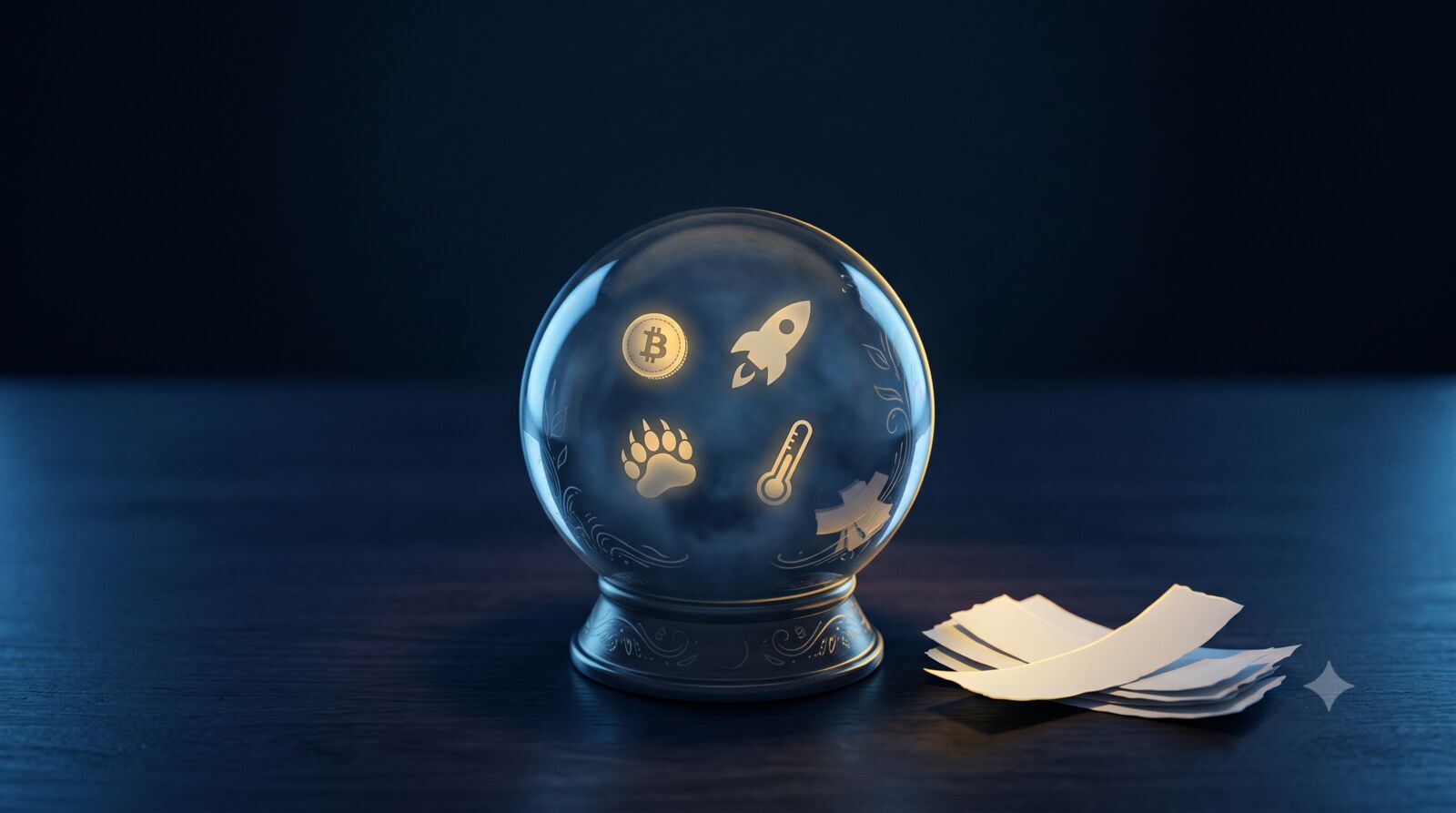
In January 2023, the co-hosts of Students Incorporated, the student-produced podcast at the International Community School of Bangkok (ICS Bangkok), surveyed listeners on what they predicted would happen that year. They also asked a second, sillier question: which wild animal did each listener think they could beat in a fight, bare-handed? Three years on, the second question turns out to explain the first one better than anyone on the show probably intended.
The Grizzly Bear Confidence Gap
Buried in the results was a strange little data point. Among the animals listeners said they could take in hand-to-hand combat, rats, medium-sized dogs, and house cats were the popular picks; kangaroos and elephants were the least popular. But 12.5% of ICS students said they could beat a grizzly bear unarmed, more than double the rate among American adults asked the identical question in a 2021 YouGov survey, where 6% of respondents, almost entirely men, made the same claim. As one host put it on air:
From this statistic, we can conclude that ICS students are more confident in their ability to fight animals with their bare hands than Americans.
It's a throwaway bit, but also a real-world echo of something psychologists have measured for decades: people are reliably overconfident about their own judgment in exactly the domains where they have the least information. The effect is best known through the Dunning-Kruger studies, in which David Dunning and Justin Kruger found that participants who scored in the bottom quartile on tests of logic and grammar rated their own performance at roughly the 62nd percentile, nowhere close to their actual 12th-percentile result. Nobody on the Students Incorporated survey has fought a grizzly bear. That's precisely the condition under which people are worst at estimating their own odds.
The same survey asked listeners to predict the year ahead, and the same overconfidence shows up, just with lower stakes and a three-year wait to find out who was right.
A 50-50 Bet Going Into the Year
Before getting into specifics, the hosts asked a basic question: will 2023 be better than 2022? Half said yes, only 9.4% said no, and the remaining 40.6% hedged with "maybe," a fitting spread for a group forecasting twelve months they hadn't lived yet. Co-host Linda broke from the hedge, telling listeners flatly, "I have a feeling that 2023 will be better than 2022." From the vantage of 2026, that's about as close to a clean win as any prediction on the episode gets: 2023 was, in specific and verifiable ways, a genuinely strange and eventful year, just not always in the directions listeners guessed.
Where the Tech Predictions Landed
The specific predictions submitted by listeners clustered around technology, and this is where reality diverged hardest from the guesses. One listener predicted Bitcoin would keep sliding toward $5,000. Instead, Bitcoin closed 2023 above $42,000, a roughly 155% climb from where it started the year, driven by a recovering crypto market and, late in the year, growing anticipation of spot Bitcoin ETFs. Another prediction had Meta, "formerly known as Facebook," heading toward bankruptcy, a reasonable-sounding guess coming off a year in which Meta's stock had plunged 64%. Mark Zuckerberg had other plans: he declared 2023 Meta's "Year of Efficiency," cut more than 20,000 jobs, and rode a rebound in digital advertising to a 178% stock gain for the year, according to CNBC, the company's best year on record rather than its last.
The moon didn't fare any better as a prediction target. A listener forecast that Elon Musk's Starship would carry a crew of eight civilians around the moon and back in 2023, part of Japanese billionaire Yusaku Maezawa's dearMoon project. The mission didn't fly in 2023, and it never flew at all: Maezawa canceled it outright in June 2024, citing years of Starship development delays and telling reporters he could no longer "plan my future in this situation," according to Space.com. The project had been announced in 2018 on the assumption it would launch by the end of 2023, meaning the ICS Bangkok prediction wasn't wrong to expect a 2023 launch. It followed the same optimistic timeline Maezawa himself had been working from, right up until he gave up on it.
Not every tech guess missed. A listener predicted Neuralink, Elon Musk's brain-computer interface company, would make headway that year, and it did: the FDA approved Neuralink's first human clinical trials in May 2023 after rejecting an earlier application over battery-safety concerns, and by September the company had cleared its first patient to begin recruitment for what it calls the PRIME study, aimed at people with paralysis. A prediction of general "advancements in AI" also landed, if vaguely: 2023 was the year generative AI tools moved from novelty to mainstream business tool almost everywhere. And a guess about "new VR headsets" proved directionally right: Apple unveiled the Vision Pro in June 2023, months ahead of its 2024 release, keeping the headset story alive that year.
The Predictions Nobody Could Have Called
Some guesses were too far outside anyone's control to expect accuracy, and the episode is more fun for including them anyway. A listener predicted Cristiano Ronaldo would retire in 2023. He didn't, signing with Saudi club Al Nassr that January; as of 2026 he's still playing under a contract that runs through 2027. Someone else predicted the discovery of a new, brightly colored whale species; nothing of the sort was documented that year. On COVID-19, opinion split down the middle: some listeners hoped masks would disappear, others braced for a new pandemic. Reality landed in between, with most public restrictions lifted globally in 2023 and no new outbreak.
The hosts also researched what professional forecasters were saying heading into 2023, and adults didn't do meaningfully better than the teenagers. The Bank of America CEO was cited on the show predicting a "mild recession" for the U.S. that year. It never came. By late 2023, more than three-quarters of professional forecasters surveyed by the National Association for Business Economics put the odds of a recession in the next twelve months below 50%, and the economy ultimately achieved what commentators called a "soft landing," inflation falling with unemployment staying low, no recession required.
The One Prediction Everyone Got Right
If there's a prediction from the episode that held up cleanly, it's the grimmest one. The hosts cited a 36-country Ipsos survey of more than 24,000 people, in which 65% expected more extreme weather events in 2023 and 57% expected the year to be the hottest ever recorded. Both numbers proved conservative rather than alarmist. NASA and NOAA later confirmed 2023 as the hottest year in the modern temperature record, with every month from June through December ranking as the hottest such month ever measured, and July standing as the hottest month on record. The same survey found 18% expecting alien visitation and 22% expecting an asteroid strike, predictions that, unlike the climate one, stayed in the realm of fiction.
Why This Keeps Happening
None of this makes the ICS Bangkok students unusually bad at predicting the future. It makes them completely normal. Philip Tetlock, the University of Pennsylvania psychologist behind the decades-long Good Judgment Project, has shown that the average expert forecaster does barely better than chance on questions about politics and economics, and that a small subset of people, dubbed "superforecasters," outperform even trained intelligence analysts by breaking big questions into smaller ones and updating their views in small increments rather than committing to one confident guess. Confidence and accuracy, in other words, are almost entirely unrelated traits. That's the same lesson buried in the bear question: the students most sure they could take on a grizzly were almost certainly the ones who had thought about it least. A year is just a longer, slower version of the same test.