 Students Incorporated
Technology
Bangkok Teens Ran Their Own Turing Test — and AI Won
ICS Bangkok students staged an on-air Turing test and mistook a Robert Frost poem for AI — echoing a 2025 study showing chatbots can out-human humans.
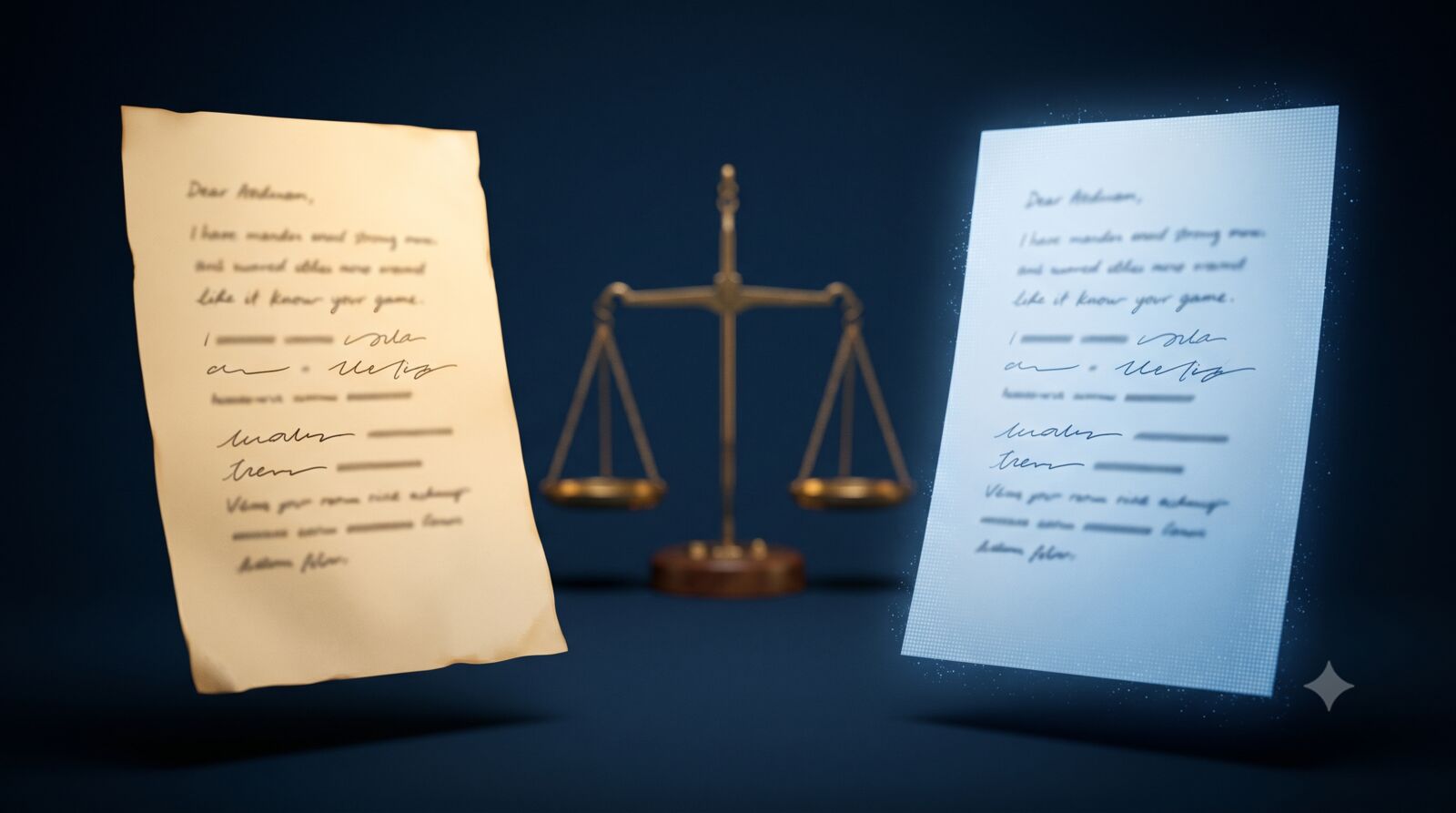
Four students at the International Community School of Bangkok sat down to play a guessing game on their weekly podcast, Students Incorporated, and one of the poems they were handed stumped them completely. Not because it was strange or clunky, the two telltale signs people usually reach for when they're hunting for a machine's fingerprints, but because it was too smooth. The panel picked it as the work of a human. They were wrong. The actual human-written poem, they decided, "sounded" like AI. It was a line from Robert Frost.
That mix-up, produced by four teenagers with no lab, no funding, and a homemade quiz format, landed on essentially the same finding that a team of university researchers spent months formally proving a few weeks earlier: told to guess, people increasingly can't.
A Robert Frost Poem Fails Its Own Turing Test
Co-hosts Mia and Frank built the segment as a three-round version of the classic Turing test, the party-game backbone of AI research since Alan Turing proposed it in 1950: put a human evaluator in front of two hidden respondents, one person, one machine, and see if the evaluator can tell which is which. Fellow co-hosts Toto and Hiwi played the guessers.
Round one, a pair of jokes, went to the humans: they correctly flagged an AI-generated pun about a robot's buggy girlfriend as machine-made, while a well-worn skeleton joke passed as human. Round two, a paragraph of dessert-eating advice, also went their way. They correctly picked out the more clinical, blood-sugar-explaining paragraph as AI, reasoning that a real person wouldn't bother being that thorough.
Round three broke the streak. Given two short poems, one about a devoted heart, one about a humming river, Hiwi and Toto reasoned their way to the wrong answer, describing the actual AI poem as sounding "smoother" and carrying "the voice of the author" more convincingly than the real one. "Oh no, AI is like too smart," one co-host said once the answer was revealed. Another put it more plainly:
It's hard for us to tell the difference a lot of times.
The Study That Made It Official
That plain-spoken conclusion happens to track almost exactly with what a rigorous academic version of the same experiment found a few weeks before this episode aired. In March 2025, researchers Cameron Jones and Benjamin Bergen at the University of California, San Diego published results from what they described as the most controlled Turing test run on modern AI to date, according to a UC San Diego news release covering the study. Participants held five-minute, text-only conversations with two hidden partners, one human and one of four systems: the 1960s chatbot ELIZA, GPT-4o, Meta's LLaMa-3.1-405B, and GPT-4.5, then guessed which was which.
When GPT-4.5 was prompted to adopt a specific human persona, it was judged to be the human 73 percent of the time, according to the study, meaning it convinced people more often than the actual human participants did. Without that persona prompting, its win rate dropped to 36 percent, and OpenAI's older GPT-4o model, tested without a persona, was picked as human only 21 percent of the time. The gap between "AI told to act human" and "AI left to just answer" turned out to matter enormously, a nuance the ICS Bangkok game stumbled into on its own: the students weren't grading raw chatbot output, they were grading responses that had, in effect, already been tuned to sound convincingly human, whether it was a curated joke or a lyrical stanza built to mimic verse.
The UC San Diego team was careful to note what their result does and doesn't mean, and the Students Incorporated co-hosts landed on nearly the same caveat by instinct. After their reveal, one host clarified that passing a conversational test like this "doesn't mean the AI is truly self-aware or conscious, it just means it can successfully imitate human-like conversation." That's the distinction the Turing test was always built to sidestep: it measures convincing performance, not understanding.
From a Classroom Framework to a Trillion-Dollar Race
Before the game, the co-hosts had walked through a four-tier framework for classifying AI, attributed on-air to Coursera's course materials: reactive machines like IBM's chess-playing Deep Blue, which react but don't learn; limited-memory systems like today's large language models and self-driving cars, which improve from data; theory-of-mind AI, which would read human emotion, something chatbots are only beginning to approximate; and fully self-aware AI, which remains speculative. It's a tidy scaffold for a fast-moving, now-trillion-dollar industry the co-hosts described as a genuine arms race among OpenAI, Google DeepMind, Microsoft, Nvidia, Anthropic, and others, each racing toward a different piece of the same frontier.
Where the Stakes Stop Being Hypothetical
The episode's second half moved from party games to two industries the co-hosts argued are already being reshaped: healthcare and transportation. They pointed to Google DeepMind's AlphaFold, which compressed years of protein-folding research into hours and has become a genuine engine for faster drug discovery, and to AI-assisted image screening catching cancers earlier in scans than some human readers.
On the road, the co-hosts zeroed in on robotaxis, citing Baidu's Apollo Go service in Wuhan, which they said had logged nearly 900,000 rides in a single quarter of 2024 at fares as low as 55 cents. That single-city snapshot has since become a much bigger story. As of May 2026, Apollo Go's footprint had reached 27 cities globally, according to reporting from CnEVPost, and Baidu says the service has completed more than 22 million cumulative rides and now runs roughly 350,000 paid rides a week. In June 2026, Apollo Go secured Level 4 autonomous approval in Switzerland for a service called AmiGo, run with the Swiss postal service, putting Baidu ahead of both Waymo and Tesla in bringing driverless vehicles into European public transit, according to Electrek. Waymo, for its part, has kept pace on a different track: the company recently raised $16 billion at a $126 billion valuation to fund expansion into more than 20 cities and now operates around 3,000 vehicles delivering roughly 500,000 paid rides a week, mostly in the United States.
The market forecasts the co-hosts cited have moved just as fast as the deployments. They quoted MarketsandMarkets' projection that the global robotaxi market would hit $45.7 billion by 2030, a figure the firm reaffirmed in a June 2026 report and still standing more than a year later. But the second number they cited, a $118.6 billion 2031 estimate from Fortune Business Insights, has since been revised: that firm's most recent public forecast instead projects the market growing from $1.27 billion in 2026 to $96.31 billion by 2034, a steeper but later curve. Goldman Sachs Research, in an April 2026 report, took a more conservative view still, projecting the U.S. robotaxi market alone at $19 billion by 2030. The spread between those numbers is itself a useful data point: nobody, including the firms paid to model this, has fully settled on how fast the disruption the co-hosts described, of driverless fleets undercutting per-mile costs for traditional taxi and rideshare drivers, will actually play out.
Convincing Isn't the Same as Conscious
What ties the segment together, months after it aired, is how well its central instinct held up. A poem good enough to pass for Robert Frost isn't proof that a machine understands longing or seasons or loss; a chatbot persona convincing enough to be voted "more human than the human" isn't proof of a mind behind it. Both are proof of something narrower and, in some ways, more unsettling: that fluency and authenticity have come apart. The Students Incorporated co-hosts closed their segment by noting that the real question "isn't just about what it can do but how we choose to use it." A year into a robotaxi race measured in tens of billions of dollars and a Turing test that a formal academic study says has effectively been passed, that question hasn't gotten any easier to answer. It's just gotten more expensive to keep asking.