 Students Incorporated
Technology
A Bangkok Teacher's Crypto Predictions, Four Years Later
In 2022, an ICS Bangkok teacher told podcast students crypto might never work as real money. A Bitcoin ETF and El Salvador's reversal since prove the hedge right.
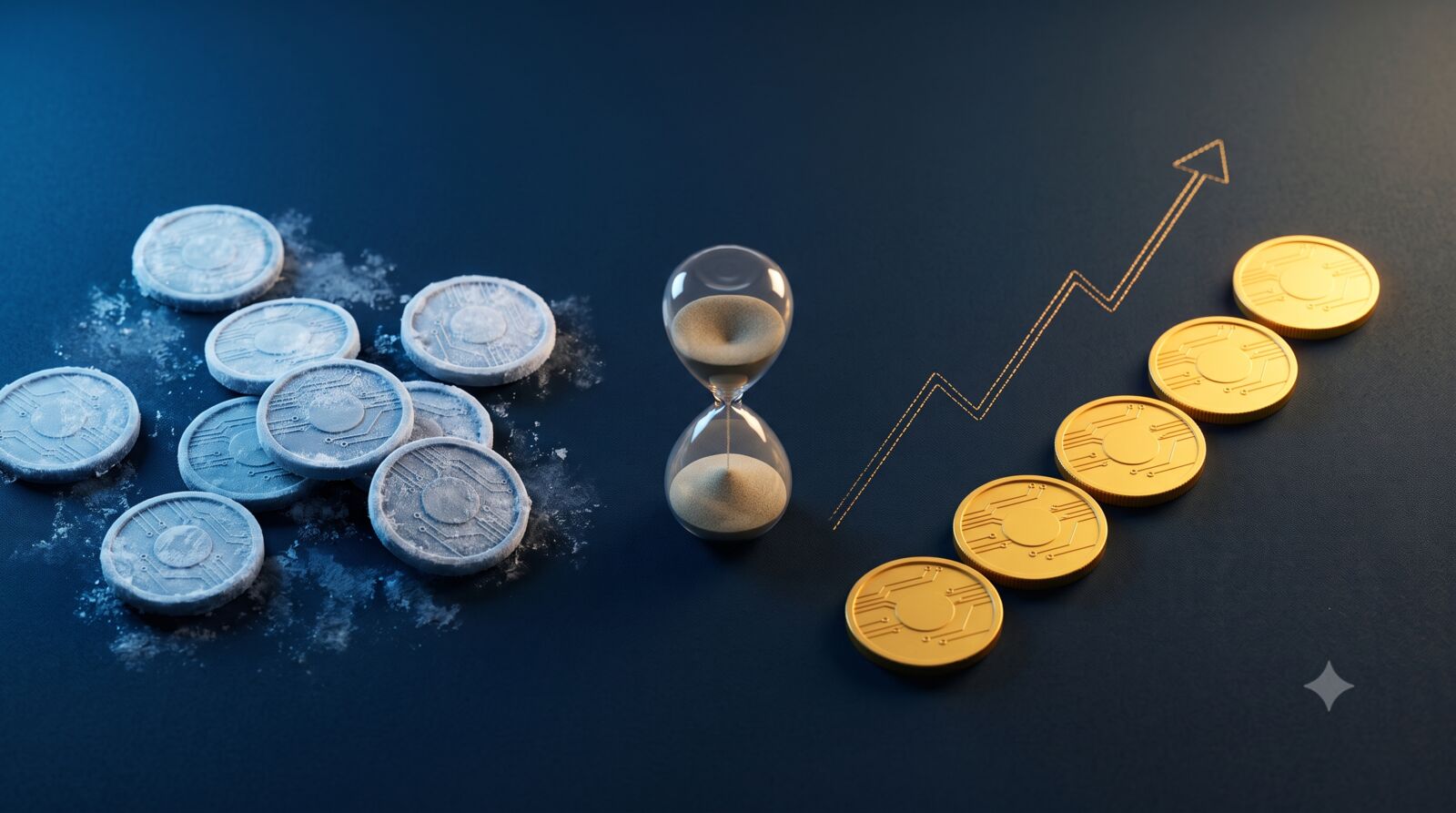
In October 2022, with Bitcoin down more than 70% from its all-time high and the crypto industry still absorbing FTX's collapse, an economics and personal finance teacher at Bangkok's International Community School (ICS) sat down with three student hosts on Students Incorporated and refused to take a side. Mr. Bryan wouldn't say cryptocurrency was doomed, and he wouldn't say it was the future of money either. Four years on, that refusal to commit looks less like fence-sitting and more like the correct call.
A Hedge From the Bottom of a Winter
The episode, "Deconstructing Crypto," landed at what's now recognized as close to the floor of the 2022 "crypto winter." Total crypto market capitalization had fallen from an all-time high above $3 trillion in November 2021 to under $800 billion by the time FTX imploded that November, according to CoinDesk's market data from the period, a roughly 75% collapse in Bitcoin's price alone over 13 months. Against that backdrop, host Mr. Jason and co-hosts Lion and Linda asked Mr. Bryan to walk through what cryptocurrency actually was, whether it counted as money, and whether it would survive.
Mr. Bryan's answer was carefully hedged from the start. He opened with a disclaimer that nothing he said was investment advice, noted he held a small amount of crypto himself ("a lesson that I learned," as Lion put it about his own losses on Solana), and laid out both the technology's appeal (cutting banks out as middlemen via blockchain) and its weaknesses (no underlying asset, extreme volatility, murky tax treatment). The episode closed with a tongue-in-cheek "top 10 reasons to get involved with cryptocurrency" list, including the fact that Bitcoin could buy street food in El Salvador and that, as of that September, a Forbes ranking had put the combined market cap of its top five coins (Bitcoin, Ethereum, Tether, Binance Coin, and XRP) at nearly $1.4 trillion.
The Market That Wouldn't Die
Mr. Bryan told his students he doubted crypto would simply disappear, given how many people believed in it, even as he doubted it would ever function as a stable currency. The first half of that held up emphatically. Rather than fading out, the total crypto market climbed from its late-2022 trough to an all-time high of roughly $4.27 trillion in October 2025, before pulling back to around $2.1 to $2.3 trillion by mid-2026, still two to three times larger than the market Mr. Bryan was describing to his students, according to CoinGecko's Q2 2026 industry report.
The single biggest structural shift he didn't predict by name arrived in January 2024, when the U.S. Securities and Exchange Commission approved the first eleven spot Bitcoin exchange-traded funds, from issuers including BlackRock and Fidelity, a decision the SEC had rejected in various forms for a decade before finally clearing it, per its own public statement on the approval. That single move shifted Bitcoin from something requiring a crypto exchange account into something available inside an ordinary brokerage or retirement account, a jump in legitimacy that price recovery alone would not have produced.
The five coins from that September 2022 Forbes ranking didn't all keep pace with that legitimacy, though. Bitcoin and Ethereum remain the two largest cryptocurrencies by market capitalization years later, but Tether's stablecoin category has grown mostly by regulatory attention rather than price movement, since a stablecoin is designed not to move. Binance Coin and XRP are both still traded, but neither has come close to Bitcoin and Ethereum's combined dominance of the market Mr. Bryan was describing.
El Salvador's Reversal
One of the "top 10" list's punchlines, that Bitcoin was already legal tender in El Salvador and usable for tamales and empanadas on the street, hasn't aged the way it sounded in 2022. In January 2024, El Salvador's legislature voted 55 to 2 to strip Bitcoin of its legal-tender status, making its use by businesses voluntary rather than mandatory and barring it from paying taxes or settling government debts, according to reporting on the reform by Global Finance Magazine and legal analysis from BLP Legal. The change was a condition attached to a $1.4 billion IMF loan package, which had pushed El Salvador to "mitigate potential risks of the Bitcoin project." The government has kept buying Bitcoin for its own reserves since, but the experiment Mr. Bryan's students joked about, an entire country transacting in crypto, is effectively over as policy.
Regulating the Boring Part
Mr. Bryan's sharpest criticism of crypto wasn't about price swings. It was that, unlike a stock or a bond, most cryptocurrencies have no underlying asset behind them at all.
So I have a limited imagination, but I have a hard time envisioning a stabilized cryptocurrency that can gain and retain the economic prerequisites of currency.
Washington's answer, when it finally came, targeted exactly that gap, but only for the corner of the crypto market built to avoid it. On July 18, 2025, the GENIUS Act was signed into law, creating the first federal framework for "payment stablecoins," the dollar-pegged tokens like USDC that are meant to hold a steady $1 value. The law requires those coins to be backed one-to-one by cash or short-term Treasuries, publicly disclosed monthly and audited by an independent accounting firm, according to legal summaries from Mayer Brown and the White House's own signing statement. It's a narrow fix: Bitcoin and Ethereum, the coins that actually dominated Mr. Bryan's conversation, remain unbacked by design and untouched by the new law. But it's also the first time federal statute has drawn a hard line between "money-like" crypto that needs the guardrails of real currency and speculative crypto that doesn't get them.
The Volcker Comparison Held Up
The one prediction Mr. Bryan made with real confidence wasn't about crypto at all. It was about inflation. Comparing 2022's price spikes to the late 1970s, he noted that then-Fed Chair Paul Volcker had pushed interest rates as high as 20% to break inflation, adding: "a similar action could be required these days with our unsustainable levels of inflation."
The Fed didn't go to 20%, but it came closer to the Volcker comparison than almost any tightening cycle since. U.S. inflation peaked at 9.1% in June 2022, the highest reading since 1981, and the Fed responded with eleven rate hikes between March 2022 and July 2023, taking the federal funds rate from near zero to a range of 5.25% to 5.50%, the fastest hiking cycle since Volcker's era. Rates stayed there for more than a year before the Fed's first cut in September 2024, a rare case of a classroom aside turning out to be the most accurate forecast in the episode.
Still an Open Question
What Mr. Bryan never resolved, and what nothing since has resolved either, is whether crypto has actually become money, or just gotten better dressed. A Bitcoin ETF sitting inside a retirement account is a legitimacy win, but it's still a bet on price, not a medium of exchange. Stablecoins now carry federal reserve requirements, but they're explicitly designed to imitate dollars rather than replace them. And the one country that tried to make Bitcoin an everyday currency backed off under IMF pressure less than two years after the episode aired.
Lion's blunter, in-the-room prediction, "I think in the long term it's going to fail because nothing beats real estate, honestly," pointed to Bitcoin's unlimited-issuance-of-new-coins problem versus land's fixed supply. It was about a different question than Mr. Bryan's, and neither has been fully settled. The market is bigger, more regulated, and more institutionally normal than it was in the fall of 2022. Whether that makes it more like a currency or simply a more respectable form of speculation is the same question Mr. Bryan left his students with four years ago. It just comes with better data now.