 Students Incorporated
Education
Why the Worst Interview Questions Get the Worst Answers
A leading question gets you agreement, not information. Bangkok students rank the worst questions ever asked on air and show how to rewrite each one.
Most bad answers start with a bad question. On episode 141 of Students Incorporated, host Mr. Jason, facilitator Sarah, and student panelists Midnight and Rini of the International Community School of Bangkok took apart how questions are built, from leading traps to open-ended prompts to the worst questions ever asked on live television and radio.
Their thesis, backed by plenty of research: the way you word a question decides what answer you can get.
The trap, demonstrated live
The most useful moment in the episode is a setup. Sarah turned to Midnight and asked, "Why is Stray Kids your favorite music group?"
Midnight took the bait and listed reasons: brilliant, talented, kind, funny, excellent music, great dancing.
Then the panel broke it down. The question assumed Stray Kids was Midnight's favorite group and left no room for any other answer. That was the point of the exercise. "When we're asking a leading question, we're not actually gathering authentic information," Sarah said. "We're just looking for confirmation of our own opinion."
She compared it to a prosecutor asking, "So you were angry when you left the house, right?"
For the record, Stray Kids really is Midnight's favorite group. That doesn't save the question. A leading question can land on the truth and still fail, because it never allowed for a different answer.
The panel's rewrite: "What specific ways does Stray Kids' production style stand out to you?" It assumes nothing, pushes in no direction, and can't be answered in one word.
Fifty years of evidence that wording changes answers
This is one of the most studied problems in psychology. In 1974, researchers Elizabeth Loftus and John Palmer showed people film of car crashes and asked how fast the cars were going. The only thing that changed between groups was the verb. People asked how fast the cars were going when they "smashed" into each other gave higher speed estimates than people asked about cars that "hit" or "contacted" each other.
A second experiment went further. Asked later about the crash, participants who had heard the "smashed" version were more than twice as likely to say they had seen broken glass, though the film showed none. One word had changed what people remembered.
Surveys hit the same problem. Sarah described acquiescence bias, citing survey-design research from Typeform: people tend to agree with whatever statement is put in front of them just to be polite. "Wasn't that movie amazing?" gets a yes even from someone who hated it.
Pollsters design around this. Pew Research Center's questionnaire guidance warns that the agree-disagree format invites acquiescence, especially from less informed respondents, and recommends asking people to choose between competing statements instead. The effect can be large: a study published in Political Analysis found that acquiescence bias can inflate estimates of how many people hold conspiratorial beliefs by as much as 40 to 50 percentage points.
The episode's mid-show message applied this to headlines: when a story claims nine out of ten people agree on something, ask what the original question was. The News Literacy Project can help with spotting survey bias.
Open questions build bridges
Rini gave the panel its working definition: an open-ended question is "any question that cannot be answered with a simple yes, no, or one-word answer. It forces the speaker to unpack their thoughts and explain or describe their reasoning."
Open questions usually start with what, how, why, or in what ways.
The panel was blunt about what closed questions do in an interview. Ask a guest whether they enjoyed making their latest album and they can say yes, and that's the end of it. Ask what the hardest part of making it was, and a conversation starts. One panelist put it this way:
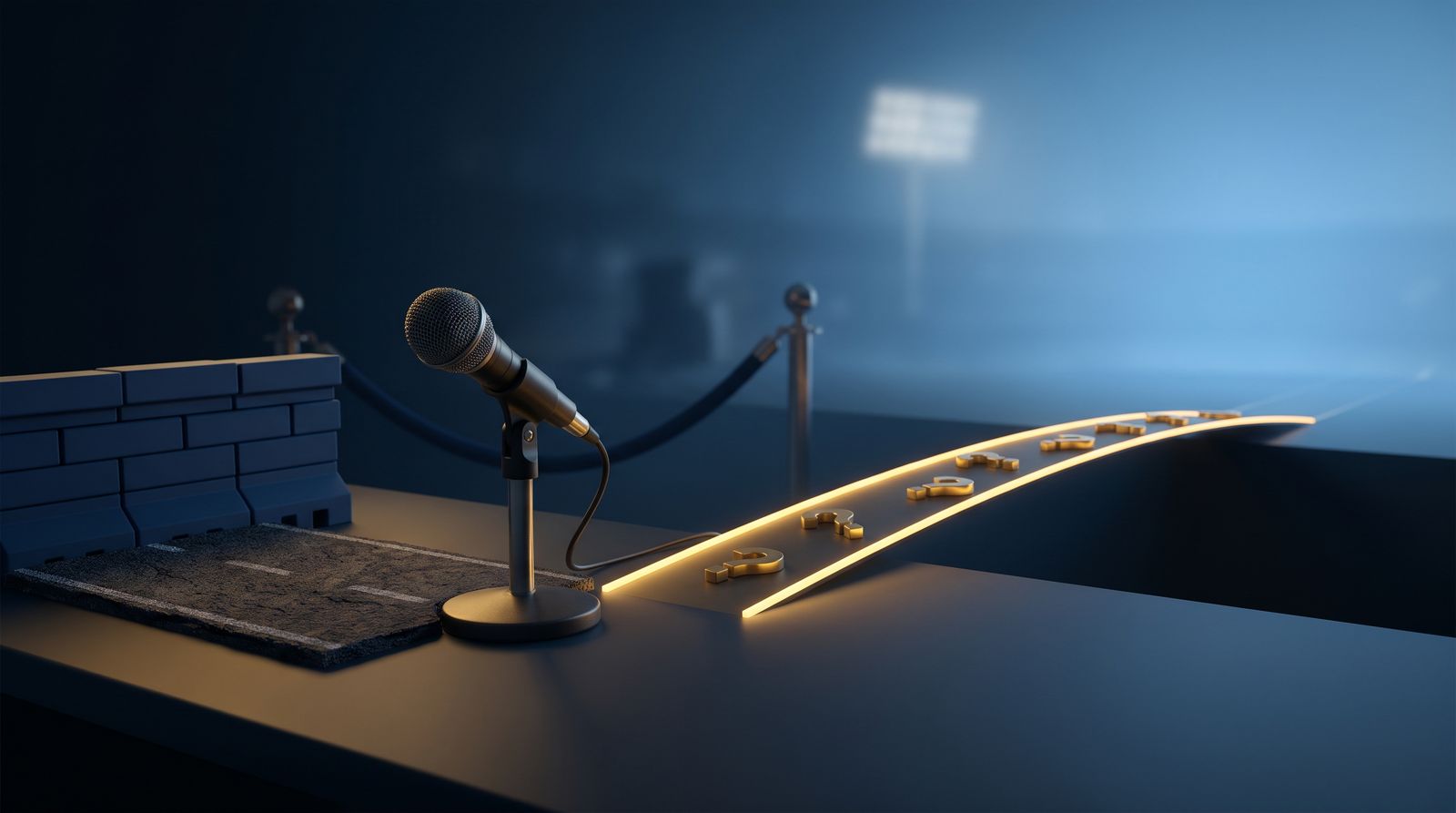
Closed questions create roadblocks. Open-ended questions build bridges to new territory.
Midnight connected this to work by Harvard Business School researchers Alison Wood Brooks and Leslie John. In their 2018 Harvard Business Review article "The Surprising Power of Questions," they argue that follow-up questions are the most valuable kind, because they show you are listening and want to know more. The lab work behind it, a 2017 paper in the Journal of Personality and Social Psychology led by Karen Huang with Brooks and colleagues, found that people who asked more questions, especially follow-ups, were better liked by their conversation partners. In speed-dating data, they were also more likely to be offered a second date.
Closed questions still have a place. Good interviewers use closed or numerical questions to establish facts, then follow right away with open questions about what those facts mean.
Five fixes from a school day
First, the panel practiced on everyday student life. Mr. Jason read out closed questions and the students rewrote them on the spot.
- "Was the history test difficult today?" Midnight changed it to "Which specific questions on the history test caught you off guard today?" That gets someone talking about the material instead of just complaining.
- "Did you like the new school cafeteria menu?" Rini's version: "How does the new cafeteria menu compare to what we had last year?" That leaves room to talk about options and prices.
- "Is your new school club going well?" Sarah's version: "What key goals is your club focusing on achieving this semester?"
- "Do you agree with the referee's call at the end of the game?" Midnight called this a leading question built to start an argument and changed it to "How would you describe that final play from your perspective on the field?"
- "Are you feeling confident before your presentation?" Rini's version: "In what ways has your preparation helped you feel ready for this presentation?" That gives the person credit for the work they put in.
As Mr. Jason pointed out, each fix hands control back to the speaker.
The hall of shame
The panel then counted down the ten worst questions asked on air, with a better version for each.
"How does it feel to lose?" Asked of athletes moments after a championship loss, it's lazy and painful. The panel suggested asking what went through the athlete's mind in the final moments of the game.
"Who are you wearing tonight?" This award-show staple reduces fashion to a brand name. The panel suggested asking what story or creative idea shaped the person's look. The criticism isn't new: in 2015, The Representation Project's #AskHerMore campaign urged red-carpet reporters to ask women about their work instead of their dresses, and Reese Witherspoon backed it at that year's Academy Awards, according to PBS NewsHour and others.
"How do you balance being a working mom and having a career?" The panel noted that this question goes almost entirely to women in leadership. Their fix works for anyone: what daily systems or routines help you manage big projects alongside personal commitments?
"Isn't it true that your campaign is completely failing?" This one puts the guest on the defensive immediately. Ask instead what adjustments the campaign is making to address voters' concerns, and you get a strategy answer, not a shouting match.
The top spot went to "Any last words?" It sounds like you're about to pass sentence on the guest. A better closer asks what final thoughts or advice the guest wants to leave with the audience.
Why it matters past the microphone
Loftus showed that a question can change what someone remembers. The polling research shows it can change what a whole country appears to believe, and Brooks and John found it can even change whether someone likes you.
The students' advice holds up against all of it. Cut the assumption, start with what or how, and then listen, because the best question in most conversations is the follow-up you didn't plan to ask.