 Students Incorporated
Community
Why Bangkok's Weekend Markets Are Winning Over Fast Fashion
As the EU makes fast-fashion brands pay for their own waste, a Students Incorporated panel found Bangkok's flea markets already answering the question.
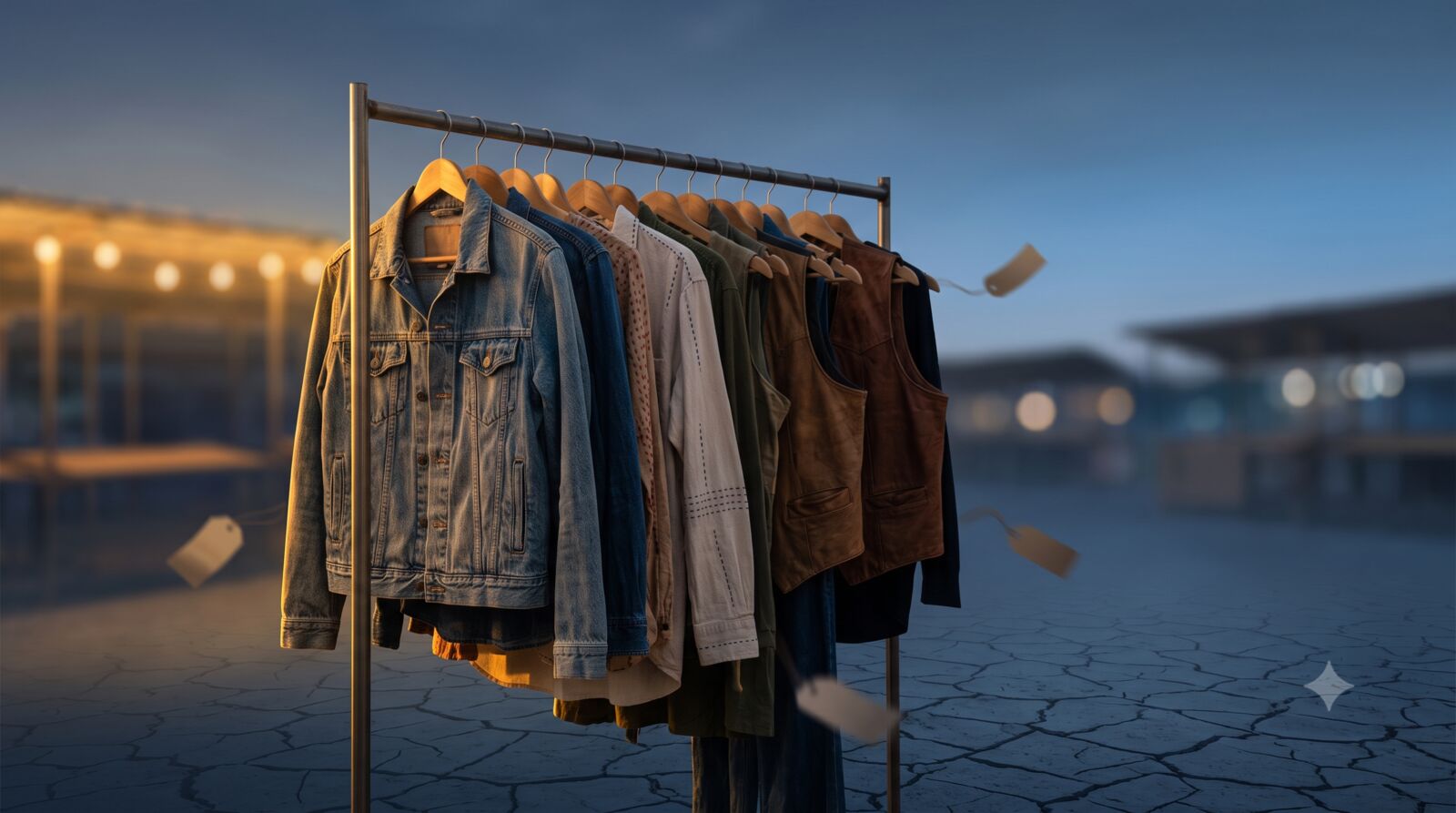
A 300-baht shirt and a warehouse full of secondhand denim are arguing over the same customer, and lately the warehouse is winning. That was the real subject of a recent Students Incorporated roundtable, where co-hosts Proud and Esther and student producer Highlight put fast fashion and thrifting side by side and asked which one actually deserves a spot in a Bangkok teenager's closet. Their conclusion, that the honest answer is "both, carefully," turns out to track almost exactly with what is happening in the city's retail data and in a wave of new regulation aimed squarely at the fast-fashion business model.
The Price Tag Was Never the Real Price
Esther opened the episode with a line from British journalist Lucy Siegle, who spent years covering the fashion industry's environmental toll before it became a mainstream story: "Fast fashion isn't free. Someone, somewhere is paying." Siegle's phrase, first popularized through the 2015 documentary The True Cost, has become close to a rallying cry for a decade of reporting on garment-industry labor abuses, and it's no less true a decade later. Esther put it in her own terms a few minutes on.
When a t-shirt costs less than your lunch, you have to ask, who's paying the real price for it?
That question has stopped being rhetorical in Europe, at least. In September 2025, the European Union passed the biggest extended producer responsibility law fashion has ever faced, and its consequences start landing this year. Clothing brands and retailers will now have to pay to collect, sort, and recycle everything they sell once it's discarded, with fees weighted so that harder-to-recycle, lower-quality garments cost the company more. Full enforcement begins in October 2026, and companies that don't comply risk fines of up to five percent of annual revenue. Destroying unsold inventory, long a quiet fast-fashion practice, becomes illegal in the EU this year too. France has gone further still, voting in June 2026 to bar ultra-fast-fashion retailers like Shein from advertising in ways that "encourage overconsumption." It's the regulatory version of the exact math Esther was doing on air.
Producer Highlight brought the environmental side of that math to the table, and the numbers hold up against independent research. The UN Environment Programme has reported that roughly 60 percent of clothing today is made from synthetic, plastic-based fibers like polyester, and a 2017 Ellen MacArthur Foundation study found that washing those clothes releases an estimated half a million tonnes of plastic microfibers into the ocean every year, equivalent, by the foundation's own comparison, to roughly three billion polyester shirts' worth of plastic. The World Wildlife Fund's figure on cotton, which Highlight also cited, is just as stark: producing the cotton for a single t-shirt can take more than 2,700 liters of water, close to three years of drinking water for one person.
Then there's where the clothes go when nobody wants them anymore. Highlight described satellite-visible mountains of used and unsold clothing dumped in Chile's Atacama Desert, calling the sight "a monument to our overconsumption." That's not an exaggeration for effect. It's a documented crisis. An estimated 39,000 to 40,000 tons of clothing are trucked into the desert near Alto Hospicio and burned or abandoned every year, much of it arriving through the Iquique free-trade zone with store tags still attached, according to reporting from National Geographic and legal trade press covering Chile's own emerging producer-responsibility law. The pile now covers close to three square kilometers, roughly 580 football fields, and as of this year Chile has designated textiles a "priority product" under a national recycling strategy of its own, a direct response, environmental reporters have noted, to waste arriving from exactly the kind of EU market now trying to legislate its way out of the problem.
Before the break, the panel also pushed back on the idea that fast fashion's low price tags are actually a bargain. One host walked through the arithmetic of "cost per wear": a 300-baht shirt worn only twice works out to 150 baht per wear, while a sturdier 900-baht shirt worn for years can cost as little as 10 baht per wear. The cheaper item is often the more expensive one over time. Garments built for a handful of wears, in that framing, aren't a manufacturing flaw so much as the business model itself.
Bangkok's Own Answer Is Already Open on Weekends
If the panel's instinct was to point students toward thrifting as the more defensible choice, Bangkok's retail scene is already voting the same way, and not quietly. Reporting from Monocle in March 2026 profiled Made By Legacy, a ticketed vintage and flea-market festival held in warehouses, rooftops, and car parks around the city, where roughly 15,000 people show up per event and vendors face a two-year waiting list to get a stall. Its founder, Vudi Somboonkulavudi, told the magazine he built it because "I am a shopper but I don't like malls." He's not alone: the same piece notes that Bangkok's ever-expanding mall inventory is increasingly struggling to fill retail space, even as markets like his keep growing.
The same reporting found that these markets are becoming more than just a place to offload old clothes. They're also where the city's slow-fashion alternative to both fast fashion and pure thrifting is getting its start. Local Made Goods, a Bangkok label founded in 2024 that hand-stitches jackets and shirts with Thai craftspeople, used Made By Legacy as its first real audience. "During the first six months of the brand, we could barely sell pieces and no one understood what we were doing," co-founder Kantawan Narakulmongkol told Monocle. The appeal for shoppers, she said, is that "you can talk directly to the owner of a brand and exchange ideas," the opposite of the anonymous, algorithm-driven shopping loop Proud described on the podcast.
That's a local echo of a much bigger regional shift. Southeast Asia's secondhand and resale apparel market has been one of the fastest-growing corners of the global industry, driven by mobile resale platforms and peer-to-peer selling communities on apps like Carousell, Shopee, and Lazada. Carousell's own 2024 year-in-review data found women's fashion was the single top secondhand category traded across Southeast Asia, Hong Kong, and Taiwan. The global secondhand apparel market itself is on track to roughly double by 2031, according to recent market analyses, expanding at closer to three times the growth rate of new-clothing retail, a trend analysts consistently credit to Gen Z shoppers who treat resale less as a bargain-hunting fallback and more as a values-driven default.
Esther's own thrifting story fit right into that framing: an "amazing, perfectly worn-in denim jacket from the 80s" found at a Bangkok market, with a faded patch on the back, that she described as "better made than any new denim jacket I could buy today." Proud, meanwhile, pointed to the flip side of the equation driving fast fashion's staying power: the TikTok and Instagram churn that makes a wardrobe feel outdated within weeks of a purchase, calling the resulting FOMO "immense."
Thrifting's Own Growing Pains
Where the episode earned its credibility was in refusing to let thrifting off easy. The panel raised the same friction points showing up in coverage of the secondhand boom elsewhere: the time cost of digging through racks for something wearable and inconsistent vintage sizing among them. As secondhand shopping has gone from niche to cool, resellers increasingly clear out the best vintage and brand-name pieces from thrift racks to flip at a markup on Instagram, a "gentrification" of thrifting, as the hosts put it, that risks pricing out the shoppers who relied on secondhand stores because they had no other affordable option, not because it was trendy.
That tension is visible even in Bangkok's flagship secondhand economy. Chatuchak Weekend Market, with more than 15,000 stalls, remains the anchor of the city's vintage trade, but its most sought-after sections have become destinations in their own right for resellers and collectors as much as for budget shoppers, part of the same commercialization curve the hosts described on air.
Dressing With Purpose
The episode closed on a phrase host Mr. Jason offered as a summary: "Know your clothes so your clothes know you." It's a tidier line than the reality it's describing, but the reality backs it up. A regulator in Brussels threatening five-percent fines, a desert in Chile visible from orbit, and a Bangkok warehouse market with a two-year vendor waitlist are all, in their own way, downstream of the same decision point the panel kept circling back to: not whether to buy fast fashion or secondhand, but whether to ask where either one actually came from. For very different reasons, regulators and market founders alike are now betting that more shoppers will start asking.