 Students Incorporated
Education
Why an ICS Bangkok Teacher Marks 'History Repeats' Wrong
An AP World History teacher explains why the standard classroom answer about learning from the past is wrong, and what actually recurs across eras instead.

At the International Community School of Bangkok, world history teacher Mr. Andy tells his Advanced Placement students something that surprises most of them: if a test asks why we study history and they answer "so we don't repeat its mistakes," they will get that question wrong. It's the answer nearly every student walks in with, and in his class, it's an automatic loss of points.
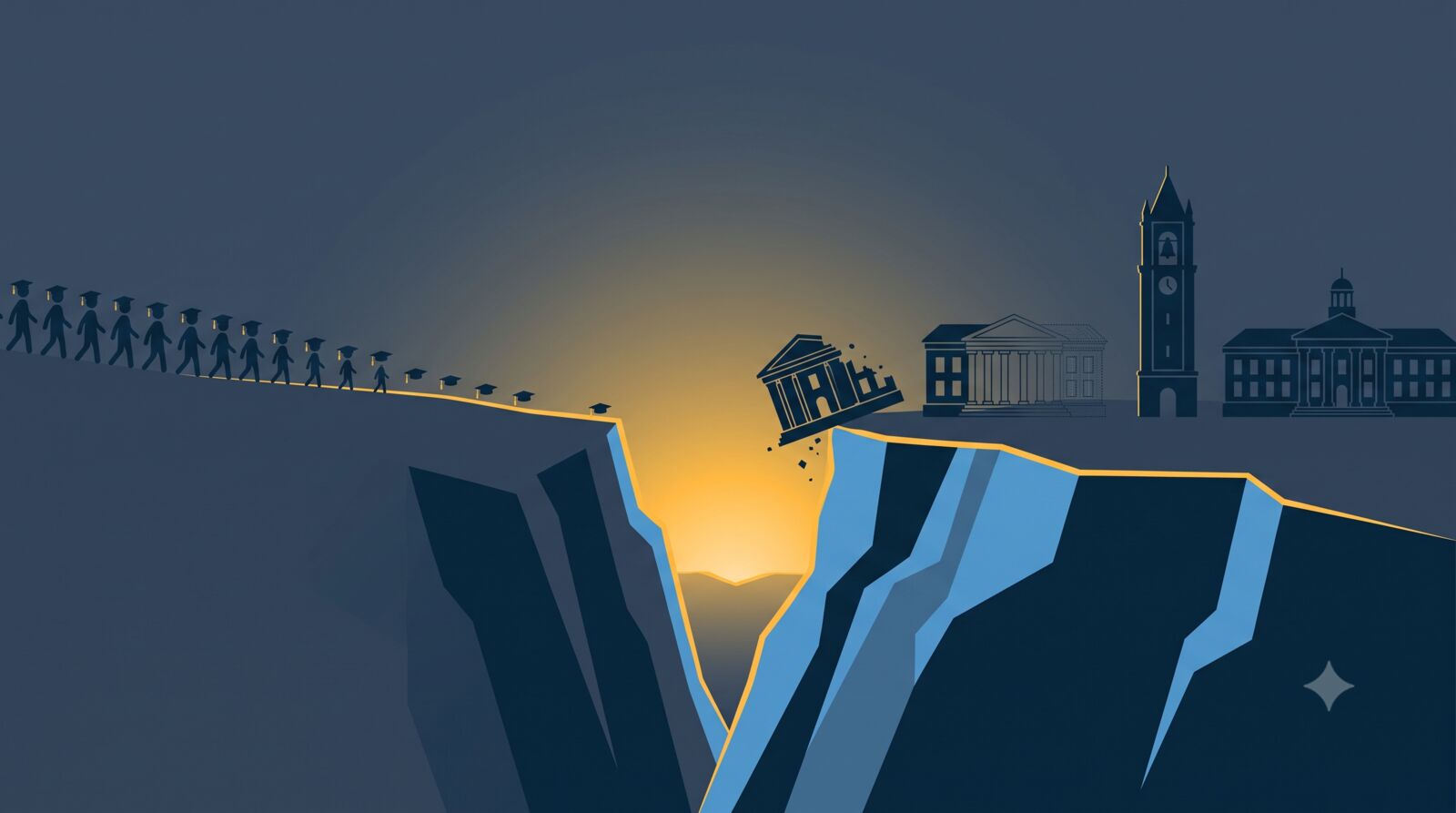
His reasoning is blunt. "We don't study history in order to not repeat the mistakes of the past," he said on a recent episode of Students Incorporated, the podcast produced by ICS Bangkok students, "because society's never really stopped repeating the mistakes of the past." If the point of history class were to prevent repetition, two world wars, a genocide roughly every generation, and a fresh financial crisis every decade or so would be hard to explain. The lesson doesn't fail because students aren't listening. It fails because the premise is wrong.
A Rhyme With No Verified Author
The idea that history doesn't exactly repeat but still echoes has a famous shorthand: "History doesn't repeat itself, but it often rhymes." It's usually credited to Mark Twain and captures almost exactly what Andy is arguing. There's one problem, according to the research site Quote Investigator: there's no evidence Twain ever said or wrote it. He died in 1910, and the earliest confirmed match for the phrase doesn't surface until 1965, in an essay by the psychoanalyst Theodor Reik. The "Mark Twain" attribution wasn't added until a 1970 poem quoted it that way, and from there it spread as settled fact.
There's a tidy irony here: a line about the past recurring in disguised form turns out to be a case study in exactly that phenomenon, an idea repeated so often it hardened into something nobody thought to verify. Andy makes almost the identical point about his own subject: revisiting the Reformation as an adult, he realized "a lot of what I've believed or been taught" about that era "was some myths." Correcting the record is less a one-time fix than ongoing maintenance, something a discipline has to keep doing, because the last generation's shortcuts calcify into the next generation's assumptions.
What Actually Recurs
If specific events don't repeat, what does? Andy's answer, worked out across four themes, is that patterns recur because the people living through them don't fundamentally change. Enlightenment-era ideas about natural rights and individual responsibility for one's choices didn't have to turn out the way they did, but once they took hold, they proved durable enough to structure how his students think about fairness and freedom today.
The clearest version of the pattern shows up in his technology unit. He draws a straight line from the anxiety around the Age of Exploration's navigational tools to today's classroom anxiety over generative AI: "We think about AI and say, wait, I can get that to write that for me. Do I need to learn to write?" People have feared new technology taking their jobs for as long as new technology has existed, he argues, citing the Industrial Revolution as precedent.
The precedent holds up better than the popular memory of it suggests. The Luddites, who began smashing textile machinery in Nottinghamshire in March 1811, are remembered as reflexive technophobes, but historians including Eric Hobsbawm and E.P. Thompson reassessed that reading decades ago: the weavers had used smaller frames for years and weren't opposed to machinery as such. What they were fighting was wage cuts and deskilling carried out under cover of new equipment, in what Hobsbawm called "collective bargaining by riot," a negotiating tactic, not a tantrum against progress. The anxiety was real; the target was more specific than "technology" itself.
That same specificity shows up in how people describe their AI worries today. A Pew Research Center survey published in February 2025 found that 52% of employed U.S. adults are worried about AI's future impact on their workplace, and 32% expect fewer job opportunities for themselves in the long run. Lower-income workers were the most pessimistic group. The number isn't a rerun of 1811 (it's a different technology, a different workforce, a different century), but the shape of the worry, and who has the least security to absorb it, is recognizably the same shape Andy describes.
"We don't study history in order to not repeat the mistakes of the past, because society's never really stopped repeating the mistakes of the past."
Empires Follow a Script, Except When They Don't
The unit that pushes the "recurring pattern" idea hardest is the rise and fall of empires. Andy lays out the standard sequence: a state acquires the resources and military capacity to expand, an organizing ideology binds a diverse population together, and eventually the empire's gains concentrate among an elite that loses touch with whatever made the expansion work in the first place. Overextension and resource strain do the rest.
That framework isn't unique to a Bangkok classroom. It's the pitch behind "cliodynamics," a field built by the biologist-turned-historian Peter Turchin to model political instability mathematically. In a 2010 paper in Nature, Turchin forecast that instability in the United States would peak around 2020, driven by what he called popular immiseration, elite overproduction, weakening state finances, and geopolitical strain. His 2023 book "End Times" extended the argument. It's also contested: a New Statesman essay that same year dismissed the predictions as "empty prophecies," arguing that a model flexible enough to explain any outcome after the fact isn't really predicting anything. Andy hedges in almost the same spot, noting of his own four-factor framework that "it's probably unlikely that you could define that for all of them." Historian and teacher alike land on the same caveat: the pattern is real enough to teach, not certain enough to bet on.
The Cost of Covering Everything
Andy's biggest practical obstacle isn't finding the pattern. It's finding room for it. AP World History is a survey course, and survey courses trade depth for breadth by design. Andy's workaround is to lean on specialists: when his class studies the Mongol Empire, they read both modern historians and period accounts and argue over whether the Mongols were "an awful destructive force" or, in the long run, a net benefit to global exchange. Elsewhere, he's researched the expulsion of Jews from England under King Edward (the first European king, by his account, to expel Jewish people from an entire kingdom), a piece of social history that a strictly political timeline of English kings would skip.
The squeeze on historical depth isn't confined to one classroom. The National Assessment of Educational Progress found that the share of American eighth graders scoring below its lowest "basic" benchmark in U.S. history rose from 29% in 2014 to 40% in 2022, the worst result on record for that test. A subject losing ground in classroom time is also losing ground in what students retain, on both sides of the world from each other.
History as Whose Story
Andy closes the episode with a line from a college professor: history is "his story," shaped and recorded by whoever held the power and the means to write it down at the time. That's the actual thread connecting everything else he teaches: not that events repeat, but that the historical record itself is a pattern of omission, redone by every generation that gets to hold the pen. The corrective isn't a better memory of what already got written down. It's going looking for what didn't.
That reframes the wrong answer he keeps grading down. Studying history was never going to stop people from repeating its mistakes; the record shows they haven't stopped. What it can do is widen whose mistakes, and whose stories, make it into the version being taught in the first place.