 Students Incorporated
Entrepreneurship
When ICS Students Became CEOs of Their Own Complaints
Give ICS students a CEO title over lunch lines, hall passes, and homework, and they answer with real incentive design and restorative policy, not gripes.
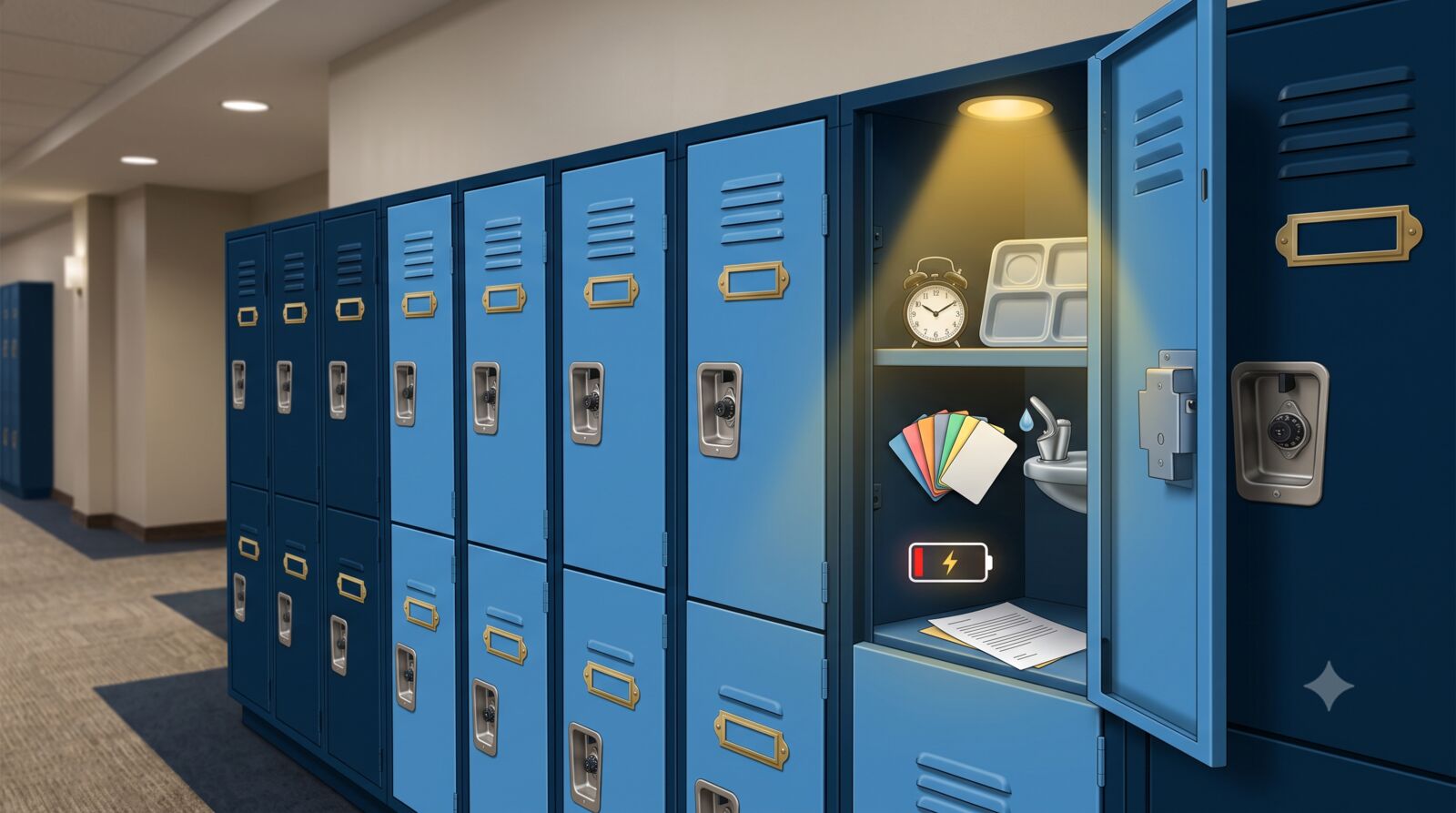
Hand a student an executive title over something they've spent years complaining about, and the complaining stops almost immediately. On episode 120 of Students Incorporated, co-hosts Proud and Vijay assigned nine classmates a specific slice of school life to run as CEO: attendance, the lunch line, the water fountains, hall passes, phone batteries, homework, playground duty, in-school suspension, and a segment they call "Interview," and asked what they'd actually change. What came back wasn't a wish list. It was incentive design, process engineering, and a few surprisingly sharp opinions about restorative discipline.
Attendance Gets an Incentive Structure
Yosep took the CEO of Attendance and Tardiness job and went straight for behavioral economics: give raises to students who show up early and on time. "As someone who's been late to school countless times myself," Yosep said, the promise of extra money for punctuality "wouldn't have even needed an alarm clock to wake up." But budget reality set in fast: paying everyone a raise isn't sustainable, so the fallback was a pat on the back for repeat early arrivals. That pivot happens to track with what researchers who study school attendance incentives have actually found: expensive cash-style rewards produce mixed results and rarely address the underlying reasons a student was late in the first place, while low-cost, social recognition, a certificate, a shoutout, extra recess, tends to move the needle more reliably. One study found students given simple nonmonetary incentives like certificates attended more than 40 percent more optional sessions than students given nothing at all. Yosep's fallback wasn't a compromise so much as the version the research actually supports. The real teeth were reserved for the negative-reinforcement track: late or absent students would owe the teachers of the classes they missed an embarrassing performance of the teacher's choosing. Miss day one, and a student could be doing push-ups for one teacher, singing for another, interpretive dancing for a third, and fetching water for a fourth.
The Lunch Line as a Systems Problem
Vanaj's fix for Lunchline Logistics reads like an operations audit. A single line for a popular dish creates bottlenecks and wastes time, so the plan was to spread high-demand meals across multiple serving stations, add an express line for students grabbing just one item, and layer in a pre-order system so kitchen staff can prep the right quantities in advance. Clearer signage and better cafeteria traffic flow would round it out. The goal is fewer crowds and faster service, not just shorter lines.
Two Different Water Fountain Platforms
Simpson, CEO of Fountain Politics, split the pitch in two: clean the fountains every two days to cut down on the germs that build up from heavy use, and add a sugar-free soda option so students have more reasons to stay hydrated. Meanwhile, over in Hall Passes, Dorcas proposed color-coded cards (one color for the bathroom, one for water, one for just needing to step out and clear your head) that students could raise silently instead of announcing their business to the whole class. It's quieter for the student, and it means a teacher doesn't have to pause a lesson to negotiate a hall pass out loud. Dorcas would also let students decorate their passes with stickers, as long as the color underneath stays visible enough for a teacher to read at a glance.
A Battery Company With Global Ambitions
Pun, self-described specialist in mobile phones, took the CEO of Low Battery Anxiety title and ran it like a multinational pitch: a redesigned seven-day battery for every major phone brand, sold at an affordable price, plus a premium lounge membership in cities and airports around the world.
No more fear for those malicious charging stations set by cyber criminals and teachers who always do their jobs too well.
It's a joke with a real observation buried in it: that low battery anxiety is as much a social problem as a technical one, and that the anxiety usually peaks in exactly the rooms where a teacher has just confiscated the charger.
Homework, Reframed as a Mental Health Issue
Porsche's platform as CEO of Homework wasn't "less homework" so much as "homework that has to justify itself": assignments should exist because they actually help a student understand the material, not just to generate another grade. Weekends, in this plan, would carry little to no homework at all, on the theory that students need real time with family and friends, or just rest, because school already takes a toll on mental health. The pitch was that homework framed this way stops feeling like a stressor and starts reading as practice, which, Porsche argued, is also where skills like time management actually get built.
The specifics back up Porsche's instinct on where the line sits. Research on adolescent workloads has found homework becomes counterproductive past roughly two hours a night for high schoolers, with heavier loads linked to higher stress, disrupted sleep, and physical symptoms like headaches, and studies out of Singapore found teenagers spending five or more hours on weekend schoolwork reported measurably higher anxiety and loss of interest in things they'd normally enjoy. It's part of why a small but growing number of schools have already adopted homework-light or homework-free weekends of their own, the same policy Porsche pitched independently as CEO.
Supervision Without Surveillance
Bang's version of Playground Duty leans away from constant watching and toward students feeling safe and supported. Supervisors would encourage kindness, make sure no one gets left out of activities, and step in calmly when conflicts start rather than policing from a distance. The goal, as Bang put it, is a balance between safety and freedom that lets playground duty feel like part of the break instead of an interruption to it.
Suspension as Counseling, Not a Study Hall
The most substantive rework came from Lucas, CEO of In-School Suspension. Right now, Lucas said, students in ISS mostly just sit and do homework, so the plan replaces that with structured time to talk to teachers or staff about why they ended up there in the first place, plus a real layer of reflection and counseling instead of a full day of independent work. "A lot of the stigma around suspension is just that: to make the students feel bad for whatever they did," Lucas said, arguing it should instead be "a way to guide students from their wrongdoings." Lucas would also add workout equipment to the room, specifically for students who need a physical outlet for pent-up emotion before they can get to the reflection part.
Lucas's instinct lines up with a growing body of research on restorative discipline. Large-scale studies in Chicago Public Schools found that shifting toward restorative practices, conversation and reflection instead of pure punishment, cut out-of-school suspensions by 18 percent while improving students' sense that their school was safe and that they belonged there. Separate research out of Pittsburgh, reviewed by the RAND Corporation, and a University of Chicago study tracking arrests found reductions of roughly a third in school-based arrests where restorative approaches replaced traditional discipline. Researchers are careful to note the evidence is still developing and isn't uniformly positive across every school, but the general pattern, that treating misbehavior as something to understand rather than only punish tends to produce calmer, safer schools, is exactly the case Lucas made without citing a single study.
Interview, Pitched as a Platform
The CEO of "Interview" segment went to two students, John and Eunwoo, who each pitched a version of the same idea from a different angle: a channel built around interviews that gives more people access to diverse opinions and personal stories, with the explicit goal of making the audience more empathetic. One framed it as a business model: interviews generating revenue that funds hiring more people, who in turn produce more interviews and a more empathetic society. The other framed it as a creative mandate: keep the platform authentic, encourage real answers over scripted ones, and lean into live conversation, short-form video, and behind-the-scenes content to stay ahead of trends while spotlighting rising talent.