 Students Incorporated
Education
When a School Podcast Turned the Mic on Its Own Hosts
A student podcast turned its own producers into game-show contestants under a clock — echoing real research on why gamified quizzes beat quiet studying.
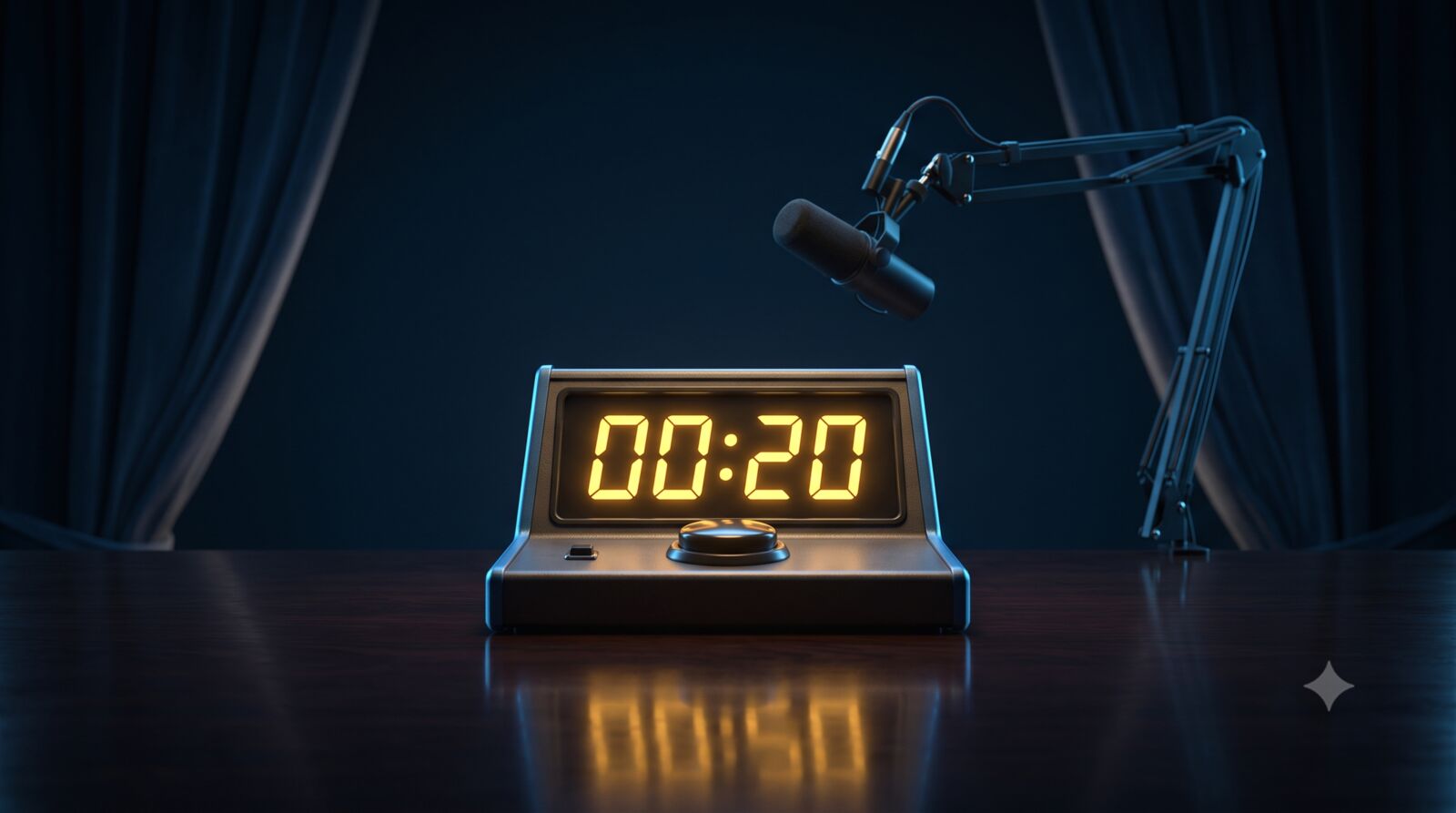
For one December episode, the teenagers who produce Students Incorporated, the podcast made by students at the International Community School of Bangkok, swapped the host chair for the hot seat. Five members of the show's second-season team were turned into contestants on a homemade game show, handed a 20-second clock, and quizzed live by their own head of school.
That head of school, identified in the episode as Mr. Stephen, joined host Mr. Jason as guest co-host, and the two built the episode around a genre the show doesn't normally touch: the game show. It's a format built on a simple, uncomfortable premise: knowing something and being able to produce it under pressure are not the same skill. The episode leaned into that gap by making its own production team live it, on air.
A Format Borrowed From the Real Thing
Before turning the cameras on their own team, the hosts ran a headline segment on the game shows that inspired the format. Jeopardy!'s original host, Alex Trebek, presided over roughly 8,200 episodes across 37 years before his death in 2020 at age 80, earning him a Guinness World Record for most episodes hosted of a single game show. Wheel of Fortune, created in 1975 by Merv Griffin, has aired more than 7,000 episodes since, with Pat Sajak and Vanna White fronting the nighttime version since 1983. The hosts noted that Sajak had become the longest-running host of any game show in 2018 and had announced plans to retire after the show's 41st season, a detail that was still in the future when the episode aired.
It wasn't speculation for long. Sajak's final episode aired June 7, 2024, and Ryan Seacrest took over that fall under a multiyear deal, with Vanna White extending her own contract two more years, according to Variety and The Hollywood Reporter. Jeopardy! transitioned around the same period: Ken Jennings, who holds the show's record 74-game winning streak from 2004, began co-hosting with Mayim Bialik in 2022 and became sole host after Bialik's exit in mid-2023.
The episode's third case study, a Japanese show the hosts called "Takashi's Castle" (a transcription slip for Takeshi's Castle, the 1986 obstacle-course competition fronted by filmmaker Takeshi Kitano), turned out to be more relevant to 2023 than the transcript let on. Amazon's Japan studio had revived the format that same year as Fuun! Takeshi's Castle, a Prime Video original streamed in more than 240 countries that Amazon MGM Studios called the biggest relaunch of the show's history. The original series was also the source material for MXC: Most Extreme Elimination Challenge, the redubbed American version the hosts mentioned, and its obstacle formats are widely credited as forerunners of Wipeout, American Ninja Warrior, and other physical-competition shows that followed. Tokyo Broadcasting System sued ABC in 2008 over Wipeout's resemblance to the original format, a sign of how far that DNA traveled.
That trivia wasn't filler: it was the hosts unintentionally building a case for why the format they were about to spring on their colleagues had staying power.
Putting the Producers in the Hot Seat
The first contestant round, called "What Do You Get When...?", put three of the show's five student producers on the spot with ten multiple-choice questions spanning chemistry (what happens when you drop a Mentos into Diet Coke), physics (what happens when you add ice to boiling water), and arithmetic done live and unaided (subtracting the number of hours in a week from the number of days in a year). Contestants had 20 seconds per question and lost the point if the clock ran out first. They finished eight out of ten, missing a chemistry question about boiling water and a vocabulary question about prefixes, and clinched the win with a correct guess on a bonus question about crossing a computer with a burger: "a big Macintosh."
The second round, "Would You Rather," shifted format entirely. Two more team members, Patience and Premi, were asked ten hypothetical dilemmas (fly or turn invisible, keep the internet or keep air conditioning, control fire or water), scoring a point only when their written answers matched, since there was no correct answer. They landed six of ten, missing on a wistful debate about whether they'd rather lose their old memories or never make a new one, a question hard enough that one of them connected it, unprompted, to a case study they were covering in another class about how memory works.
I feel like 10 seconds of rewind can help a lot of people.
That line, from Premi, weighing whether she'd rather erase something she said or rewind ten seconds, captures what the format was testing: not trivia recall, but how someone thinks out loud when a clock is running with no time to second-guess.
Why Testing Under Pressure Actually Works
Research backs up why a timed contest, rather than a quiet study session, helps review stick. Cognitive psychologists call it the testing effect, or retrieval practice: pulling an answer out of memory under pressure, not just re-reading material, is what cements it. A 2025 study published in Frontiers in Psychology found that retrieval practice, delivered through low-stakes testing with accuracy feedback in real primary-school classrooms, significantly improved students' retention of complex material compared with simply restudying it. A separate 2025 study on "mastery quizzing" by psychologists Lauren Bates, Sarah Myers, Edward DeLosh, and Matthew Rhodes found that repeated retrieval attempts outperformed other quiz formats on both repeated and new application questions, suggesting the quiz format matters nearly as much as the fact that testing happens at all.
The clock itself matters too, but not in the way it feels like it should. David Shanks, a psychology professor and deputy dean at University College London, led a team that reviewed 24 studies on test anxiety and found that practice tests and quizzes improved academic achievement and reduced students' anxiety about being tested, according to a meta-analysis published in Educational Psychology Review in August 2023 and reported by The Hechinger Report. Shanks described the effect as a "gentle" form of exposure: students get used to performing under pressure in small, low-stakes doses instead of facing it cold on a single high-stakes exam. Asked how to build that into a classroom, Shanks advised keeping the stakes low and using gamified quizzes to make testing "more fun and entertaining."
None of that literature made it into the script; the hosts weren't citing cognitive science when they built a countdown clock into a segment about vinegar and baking soda. But a game show format does, almost by accident, what researchers spend careers trying to engineer deliberately: it forces retrieval instead of recognition, adds time pressure that mimics real performance conditions, and wraps a low-stakes structure (a gift card, not a grade) around content that would otherwise just be reviewed passively. The genre's commercial durability makes the same point: a decades-old Wheel of Fortune still draws enough of an audience to justify a hosting succession plan, Jeopardy! is built around the kind of pressurized recall Shanks studies, and a Japanese format was worth reviving on a global streaming platform thirty-plus years after it debuted. Audiences respond to the mechanism the classroom research points to: watching someone perform under a clock is more engaging than watching them recite.
The Team Behind the Segment
The episode closed the way most do, thanking the "international student production team" for the work behind the scenes. But this particular hour made that team the on-air talent instead of the crew running the board, a small structural choice that inverted the usual power dynamic of a podcast built around interviewing other people. For one December week, the students who normally ask the questions had to answer them, on the clock, with their head of school keeping score.