 Students Incorporated
Education
The Riskiest Stretch of College Prep Isn't the Application
ICS Bangkok's college counselor says the months between graduation and move-in, not admissions, are where research shows students are most likely to falter.

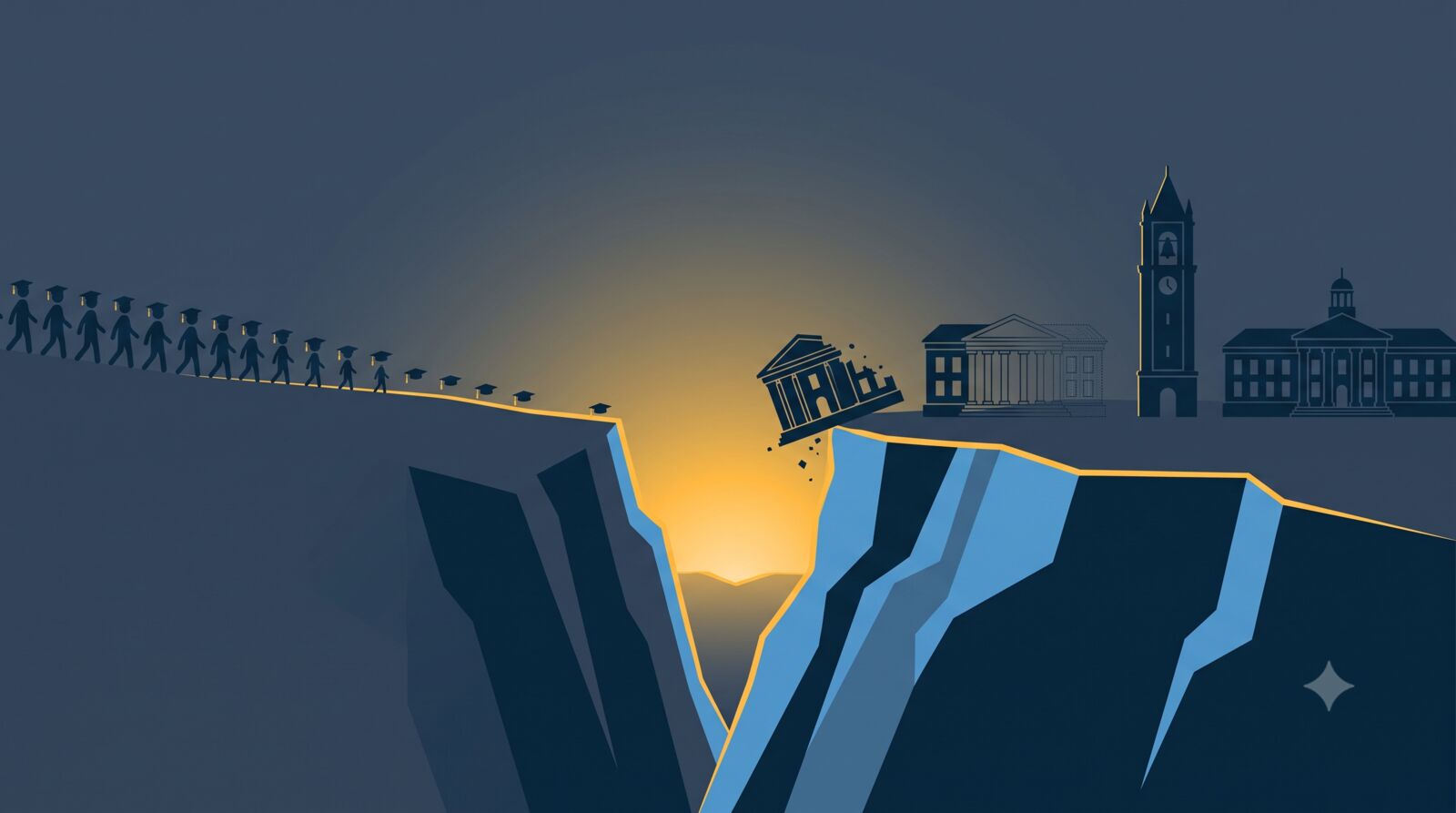
By the time a student opens an acceptance letter, the hard part is supposed to be over. Researchers who track what happens next say otherwise: somewhere between 10 and 20 percent of students who commit to a college never show up in the fall, a phenomenon studied closely enough to have its own name, "summer melt." On a recent episode of Students Incorporated, Jennifer Lembert, the college counselor at the International Community School of Bangkok (ICS Bangkok), argued that the months between a diploma and a dorm room deserve far more attention than they get, especially for the kind of student ICS Bangkok sends into the world.
Lembert, who has held the role for seven years after her family's moves through India, Malaysia, and the United States before landing in Thailand, joined co-host Chania, a graduating senior, to talk through what Mr. Jason, the show's host, calls "the in-between months": the stretch after graduation ceremonies end and before freshman orientation begins. It is a period with no institutional owner. High schools consider their job finished once the diploma is issued; colleges' formal responsibility doesn't start until move-in day. Everything in between is left to families to figure out on their own, and Lembert's argument is that "on their own" is exactly the problem.
A Documented Blind Spot
The scale of summer melt was first mapped by Harvard researchers Benjamin Castleman and Lindsay Page, whose work is now cited across higher-education policy circles, including in a research summary from Education Northwest. Their finding: nationally, one in five college-intending students who have already been accepted and said they planned to enroll never make it to the first day of class. For low-income students, students in large urban school districts, and those headed to community college, the attrition climbs as high as 40 percent. The causes aren't dramatic. Castleman and Page's research points to missed deposit deadlines, unresolved financial aid paperwork, housing logistics that stall out, and, underneath all of it, the fact that the adults who used to chase students down about deadlines (school counselors, coaches, teachers) are no longer in the picture once summer starts.
That dynamic is exactly what Lembert describes when she talks about the "in-between months": a period of "reshuffling" where families are "doing our best to prepare, but still a lot of uncertainty and unknowns." She has a phrase for the state students are in during this stretch: they have "started to leave, but have not yet quite arrived yet." It's a tidy description of the same gap the summer-melt research quantifies from the outside; Lembert is describing it from the inside, as both a professional who has walked dozens of ICS Bangkok seniors through it and, this year, as a parent doing it herself for the first time with her own child.
When the Gap Is Also a Border
Summer melt research is built almost entirely around domestic US students moving a few states, not an ocean, away from home. ICS Bangkok's graduating class does not fit that model. Many of its students are what researchers call third culture kids, or TCKs: young people who spend their formative years outside their parents' passport country and then return "home" for college to a place that is, in practice, foreign to them.
That return carries its own well-documented risks. Writing in the Foreign Service Journal, researcher and TCK specialist Megan Norton described the disorientation that can follow, from misreading American campus norms to underestimating how much a new support system has to be rebuilt from scratch, at the moment a student is losing the international-school community that shaped them. Some of that risk is invisible to campus counseling staff, who "will have no knowledge of this kind of life," Norton wrote, meaning TCK students often have to explain their own background before they can get help navigating it.
A handful of US universities have started building infrastructure around this problem. Cornerstone University runs orientation sessions for TCK students. Lewis & Clark College and Texas A&M both have TCK-specific social clubs, and MuKappa International connects TCK student groups across a network of Christian colleges. Lembert pointed to a lighter-weight version of the same idea that's already common practice: international-student pre-orientation programs that let students arrive on campus up to a week before the rest of the incoming class. Programs like these, run by schools from Grinnell to the University of Chicago, typically walk students through opening a US bank account, understanding visa and employment rules, and finding the health center, logistics that can otherwise eat the first anxious weeks of the semester. "It's just really practical," Lembert said, "but also gives you a chance to kind of settle in before some of the other more local students can arrive." ICS Bangkok students, she added, also have access to dedicated third-culture-kid summer camps, a chance to meet peers who share the hard-to-explain experience of having grown up everywhere and nowhere at once.
Not Another Class to Take
Here is the twist in Lembert's argument: she doesn't think ICS Bangkok's graduates need more academic preparation. "I actually feel like our ICS students are very well prepared for college academically," she said, noting that alumni rarely come back reporting they struggled with a calculus class or a business course after four years of an AP-heavy curriculum. What she sees them underprepared for is everything that isn't graded: managing unstructured time, setting boundaries, building a support network that doesn't already exist.
The starkest version of that unstructured time, in her telling, is a smartphone screen. "I heard one social scientist called technology the fifth dorm room wall," Lembert said, describing how a phone or a laptop can quietly wall a student into their room exactly when they most need to be walking into a dining hall or a dorm common area to meet people. Her practical counter-advice is almost aggressively low-tech: get a summer job, even a part-time one. Not primarily for the paycheck, she said, but because a job "requires you to be somewhere and it adds some structure into this very kind of new found freedom." Mr. Jason, drawing on having sent two of his own children through the same transition, added a second layer: driver's education and a US bank account before departure, concrete tasks that double as confidence-builders. "That was like a very practical way that they felt, okay, I feel like I'm part of the system again," he said.
Cheers, Ears, and Prayers
The episode closes on advice Lembert said she'd recently received herself, framed for parents navigating their own child's departure: be "cheers, ears, and prayers." Not a coach calling plays from the stands, but a cheering section, present without hovering. Mr. Jason's parting advice ran the other direction, aimed at the seniors themselves rather than their parents: "Call your parents. Talk to them."
None of this is a diagnosis with a tidy fix, and Lembert was careful to undercut her own authority on it more than once, noting she's "not an expert" and is living the parent side of this transition for the first time this year, alongside the professional side she's managed for seven. But the research on summer melt suggests the instinct is sound: the months between a diploma and a dorm key are not a passive waiting period. They're a window where measurable numbers of intending students quietly fall away from plans they'd already made, and for a Bangkok student boarding a one-way flight to a passport country they barely know, the ordinary version of that risk gets a second layer stacked on top of it. Treating the summer as prep time rather than downtime, whether that means a pre-orientation flight booked early, a checking account opened in June instead of August, or simply a plan for who to call during the first hard week, is the difference Lembert is arguing for.