 Students Incorporated
Careers
The Hiring Test Most Teens Don't Know They're Taking
A Bangkok student watched a CEO screen job applicants' phones during hiring — a practice that data shows most employers and many colleges now use too.

During a legal internship, Mia, a co-host of Students Incorporated, the student-produced podcast at the International Community School of Bangkok, watched a law firm's CEO describe her actual hiring method: in any interview, she asks to see the applicant's phone. She scrolls through the apps, checks what the person posts and follows, and decides, right there, whether the online version of the candidate matches the professional one on the résumé. By Mia's account, the CEO had turned people down over exactly what she found. Mia went home that night and audited her own accounts before anything "sketchy" could cost her the same way.
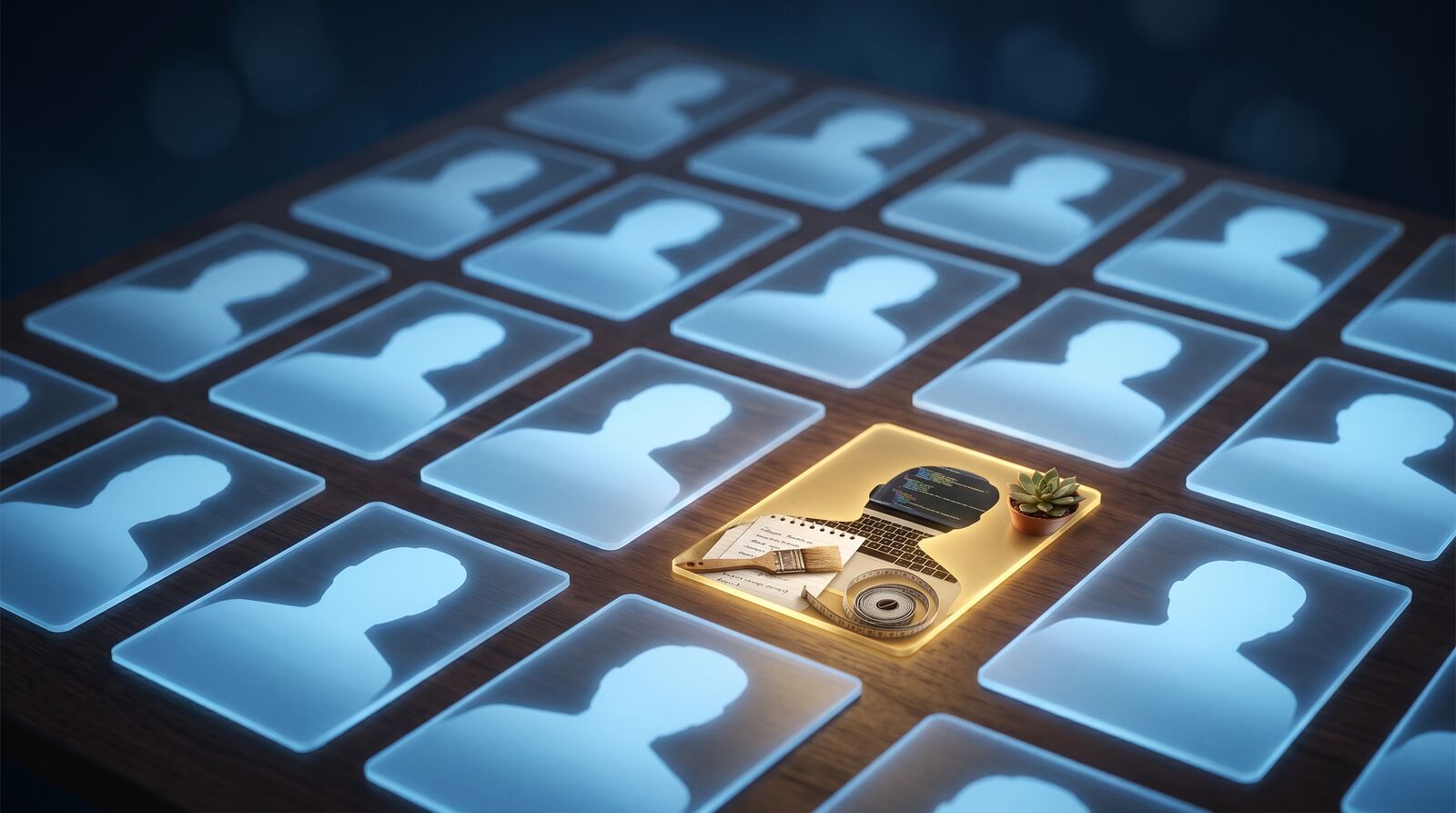
That story surfaced almost as an aside, tip nine in a ten-tip online-safety segment the show's four teen hosts ran through on a technology-themed episode. But it names something bigger than one law firm's habits. Screening a candidate's online life before deciding whether to hire them isn't a quirky exception anymore. It's close to standard practice, and it now reaches earlier than most job seekers, teenage or otherwise, tend to assume.
The Interview Before the Interview
The scale of this is not small. A 2025 CareerBuilder survey found 70% of employers now review candidates' social media profiles as part of hiring, and 54% think every applicant's accounts should be checked, not just the borderline cases. A Harris Poll commissioned by Express Employment Professionals put a similar number on hiring managers' attitudes: 60% believe every candidate's profile deserves a look. Separately, a 2023 ResumeBuilder survey found 73% of hiring managers use social media specifically to evaluate applicants, mainly to confirm cultural fit and check that what's on the resume lines up with what's actually true.
The consequences aren't hypothetical. Across multiple industry surveys, 85% of hiring managers say they've rejected a candidate because of something found online, and more than half of companies that screen candidates report they've passed on someone specifically because of what turned up. This is the mechanism Mia watched play out in a Bangkok law office, just running at a scale most applicants never see: a review that happens quietly, before or alongside the interview, using nothing but what's already public.
What Actually Gets Someone Turned Down
The ResumeBuilder data gets specific about what triggers a rejection, and it maps closely onto ordinary teenage social media behavior rather than anything exotic. Provocative or inappropriate photos or posts were the top flag, cited by 53% of hiring managers who'd passed on a candidate for online content. Images showing alcohol or drug use came in at 44%. Negative comments about a previous employer, coworker, or client sat at 35%. None of these require a candidate to have done anything illegal or even particularly unusual: they're the ordinary texture of a teenager's feed, which is exactly why the gap between "normal online behavior" and "what a hiring manager will flag" matters so much to a generation applying for its first jobs while still in high school.
That gap is not lost on the generation living it. Recent data from career platform Zety found 78% of Gen Z respondents already believe employers review their social media during hiring, and the awareness has changed behavior: 95% say they've avoided posting a real opinion online because they worried it could hurt their career, and 90% report facing an actual negative consequence (a warning, a reprimand, a conflict) tied to something they posted. About a third have split their accounts into personal and professional versions specifically to manage the exposure. Mia's late-night audit of her own feed, prompted by one CEO's offhand comment, is a smaller-scale version of a habit that data suggests is already close to universal among her peers.
Colleges Are Quietly Doing the Same Thing
The screening doesn't stop at the hiring stage, which matters for a class of students currently deep in college applications, a detail the same episode's hosts raised themselves while discussing SAT scores and College Board logins. A Kaplan survey of admissions officers at 205 top U.S. colleges and universities, released in January 2024, found 67% consider checking an applicant's social media "fair game," up sharply from 57% five years earlier. Fewer actually do it, just 28% report having checked, but among that group, the results skew negative: 57% found something that hurt an applicant's chances, against only 38% who found something that helped. Kaplan has tracked this specific question since 2008, and the trend line only moves one direction: more admissions officers consider it legitimate, even as most still don't have the staff time to do it for every file.
You do not want to lose a job opportunity because of your digital footprinting.
That's Mia's own conclusion from the story, delivered mid-tip in the show's rundown, and it holds up as well for a college application as it does for a résumé.
The Practice Sits in a Legal Gray Zone
The CEO in Mia's story wasn't running a background-check vendor's report. She was doing exactly what employment lawyers warn against: personally scrolling through an applicant's phone, unfiltered, before making a call. According to the Society for Human Resource Management, that kind of ad hoc, hands-on review is precisely what exposes a company to discrimination claims, because a manager who sees a candidate's religion, age, disability, or family status in the process of looking for "red flags" can't credibly claim it played no role in a later rejection. SHRM's guidance to employers is blunt: don't do the searching yourself, and if you screen at all, use a written policy applied the same way to every candidate, ideally through a third party rather than a hiring manager's own accounts. A wave of new state legislation moving through 2025 and 2026 has only sharpened that warning.
None of that legal exposure falls on the applicant, though; it's the employer's risk to manage, not the teenager's. For a Bangkok high schooler building a first professional footprint, the practical lesson sits one level down from the legal one: the method may be legally shaky, but the outcome Mia described, a candidate quietly filtered out before ever hearing why, is exactly what current survey data says is already routine.
The Same Episode Already Explained Why This Works
What makes the show's own tech-myths segment, earlier in the same episode, an unintentional companion piece is that it debunks two ideas that would otherwise make Mia's worry seem overblown. One myth the hosts busted: deleting a file doesn't erase it. It's typically still recoverable until new data overwrites it. Another: private or incognito browsing only hides history from the device itself, not from an internet provider, a website, or an employer running its own check. Neither myth is really about hiring. But together they explain why "I deleted that" or "that was a private account" offer far less protection than a teenager assumes, and why the CEO scrolling through an applicant's actual phone was seeing something closer to the real record than a curated public profile would have shown.
Getting Ahead of the Check
The same segment's other tips read differently once you connect them to hiring and admissions rather than generic "online safety." Adjusting privacy settings to limit who sees a post, thinking twice before oversharing personal details, and periodically searching your own name to see what's publicly attached to it are all standard digital-safety advice, but they are also, functionally, the exact preparation a CEO's spontaneous phone check or a college's social media glance would reward. None of it requires disappearing from the internet. It requires treating a public account the way Mia treated hers after that internship: as something a stranger with hiring power might actually open before deciding.
The uncomfortable part of Mia's story isn't that one law firm CEO has an unusual habit. It's that the habit is no longer unusual, it starts well before a diploma, and the record it's checking against was likely built years before anyone involved thought of it as a job application.