 Students Incorporated
Education
The Bangkok Algebra Class Where Students Can't Fake It
At Bangkok's ICS, a mastery-based Algebra 1 class and campus-wide project learning show why lecture-and-test teaching is losing research-backed ground.
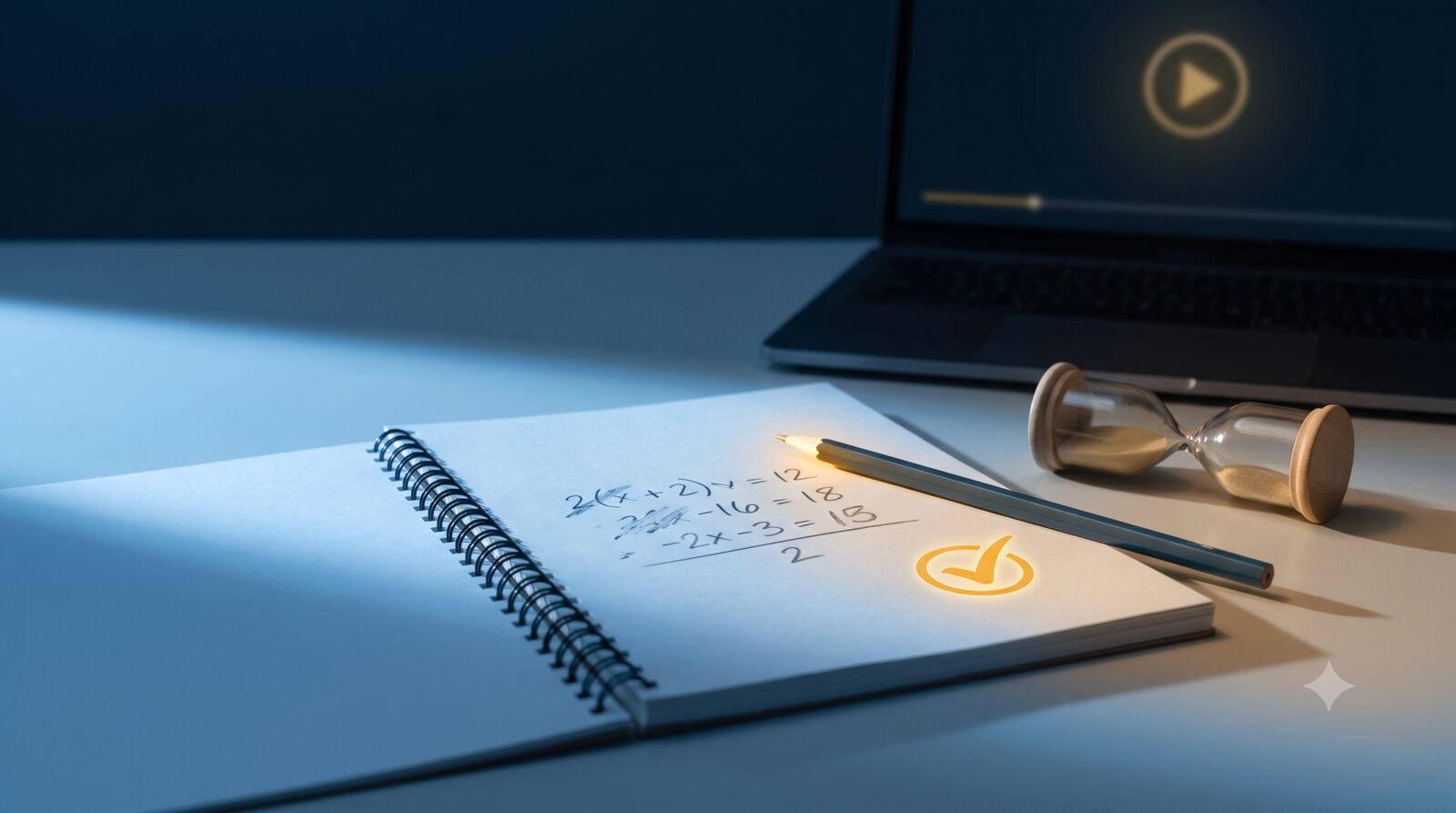
A ninth grader in Brian Hazlett's Algebra 1 class at the International Community School of Bangkok recently paid her teacher an unusual compliment disguised as a complaint. She liked how he taught, she said, but didn't like that she could no longer fake it. Under his old, more traditional approach, she could nod along and move on without fully understanding the material. Under his new one, she can't.
That new approach has a name: flipped mastery. Hazlett records his own lessons so students can watch them on their own time, then requires each student to demonstrate mastery of a concept before advancing to the next one. It's one of four teaching philosophies laid out by ICS Bangkok educators in a recent episode of the school's student-produced podcast, Students Incorporated, and together they sketch a classroom model that research increasingly says beats the one most students still sit through.
No More Getting Carried Along
Hazlett's colleague Mary Kate, who teaches seventh-grade math and previously taught the same students life skills, described a more traditional structure built around whole-class pacing: a lesson tied to an activity or game each day, with the whole room moving through it together. She said the approach is flexible enough to meet what a group of students needs, and that her students, asked to describe her teaching style, landed on "calm, fun, but under control." Its limitation, she said, is the one Hazlett's redesign was built to solve: a single shared pace makes it hard to serve both students who want to be pushed further and those who need more time.
Before he redesigned the course, Hazlett said, he felt like he was "pulling students along" through the material, and that he often cared more about their progress than they did. The mastery structure flipped that dynamic: students who once coasted through quizzes without real comprehension now have to demonstrate understanding before advancing, and the discomfort that creates seems to be exactly the point.
Before, I used to be able to fake it. Now I actually have to understand it.
In 1984, the psychologist Benjamin Bloom found that one-on-one tutoring under a mastery-learning approach outperformed conventional classrooms by two standard deviations, enough to put an average student at roughly the 98th percentile of a traditionally taught group. He called the gap the "two sigma problem": tutoring one student at a time is too costly to scale, so what combination of methods could close part of that gap in an ordinary classroom? Researchers have spent four decades chasing an answer, and flipped mastery, pioneered in a Colorado high school chemistry class in 2007 by teachers Jonathan Bergmann and Aaron Sams, is one of the few approaches with a track record of getting partway there. Bergmann and Sams reported roughly a one standard deviation gain in their own classrooms after adopting the model, a fraction of Bloom's tutoring effect but a substantial jump for a whole-class method.
Later studies complicate the picture. Meta-analyses of the flipped classroom's broader family of techniques have found real but uneven effects: one review measured a moderate positive impact on secondary students' achievement, while another found smaller gains in higher education. The common thread researchers keep finding is that flipped classrooms work best when the freed-up class time goes toward individualized, mastery-checking work like Hazlett's, not just watching the same lecture on video. The format alone isn't the mechanism; the accountability is.
The Whole Campus Is Running the Same Experiment
Hazlett's class turned out to be one instance of a pattern across ICS Bangkok's faculty. Debbie, who teaches AP Environmental Science, forensic science, and chemistry, described building nearly every unit around project-based learning: a "bubble lab" in which students protect a soap bubble the way a human parent protects a child, then watch a classmate simply pop one the way, she said, an animal parent would let go. The exercise makes an abstract idea about parental investment physically uncomfortable, and Debbie said it visibly changes how students think about the responsibility ahead of them. Cammie Lattice, who teaches upper-school art, runs a similar structure: a cardboard-construction unit that opens with a low-stakes warm-up, partners racing to build a model Eiffel Tower, before students design and build a functional object from scratch, presenting a process portfolio rather than just a finished piece.
Lattice ties her version of the model to what she calls growth-mindset theory: she tells students who feel like a "one" at a new skill that she wants to see them reach a three or four by the end of a unit, and tells students who are already strong to aim for a seven pushing toward a nine. The largest experimental test of growth-mindset teaching to date, a 2019 study in the journal Nature covering nearly 12,500 ninth graders in a nationally representative sample of American public high schools, found that a short, low-cost mindset exercise measurably improved grades among previously lower-achieving students, with the strongest effect where the surrounding peer culture reinforced the same message. The real takeaway wasn't the exercise itself but the assumption underneath it, one Lattice's and Hazlett's approaches share by design: ability is something a student is still building, not something fixed and already revealed.
The project-based instinct behind Debbie's and Lattice's classrooms has its own strong numbers. A 2021 randomized study led by researchers at the University of Southern California, published through Lucas Education Research and later in the journal Educational Evaluation and Policy Analysis, tracked project-based versions of AP U.S. Government and AP Environmental Science courses across five school districts. Students in the project-based sections passed the AP exam at a rate eight percentage points higher than students in traditionally taught sections after one year of teacher training in the method, and ten points higher after two years, gains that held up across income levels and appeared in every participating district. The researchers noted that even skeptical teachers mostly stuck with the approach once they saw how their students responded.
The Podcast Is the Point, Too
The clearest example of project-based learning at ICS Bangkok may be the one producing the episode itself. Mr. Jason, who teaches the school's marketing class alongside business, entrepreneurship, and digital media courses, built Students Incorporated as a working assignment rather than a simulation: students research and book guests, conduct interviews, edit and publish audio, and market the finished product, each with an accountability role and weekly progress notes. "That project right there takes someone from zero to a hundred," he said of the arc from a student's first nervous interview to running a full episode. It's an argument he's making with a functioning media operation rather than a slide deck: the same show carrying his own case study is being produced, in real time, by the students he's talking about.
The stakes go beyond one class. A seventh grader, describing what makes a good teacher, told Mary Kate that good teachers "care more about students than content," a distinction, Mary Kate said, that surprised her coming from students who otherwise care a great deal about academic performance. It lines up with what the mastery and project-based research keeps finding: the structures that work aren't the fastest-moving ones. They're built around whether a student has actually gotten there yet, giving a teacher room to notice, and respond, when one hasn't.
None of this makes the traditional lecture-test-repeat model obsolete overnight, and even the ICS teachers making the case for mastery and project-based approaches acknowledge real trade-offs: a flipped classroom can lose some of the shared-pace energy of a room moving as one, and grading individual contributions inside a group project is harder than grading a stack of identical quizzes. But between a professor's forty-year-old puzzle, a fresh AP study with double-digit score gains, and a ninth grader who can no longer get away with faking it, the direction of travel looks fairly clear.