 Students Incorporated
Education
ICS Bangkok Turns 30 as the City's School Boom Slows
ICS Bangkok is full and turning families away in its 30th year, even as Bangkok's international-school growth cools and expansion shifts to the provinces.
International Community School Bangkok turned 30 in 2023, and it is so full that parents get turned away and, according to founding elementary principal Elsie Fusazi, some cry when they hear no. That detail, offered on a 30th-anniversary episode of Students Incorporated, sits at an odd moment for Bangkok's international-school sector: the city that made ICS possible is now the one part of Thailand where this kind of growth is running out of room.
A Leased Snake Farm, Not a Campus
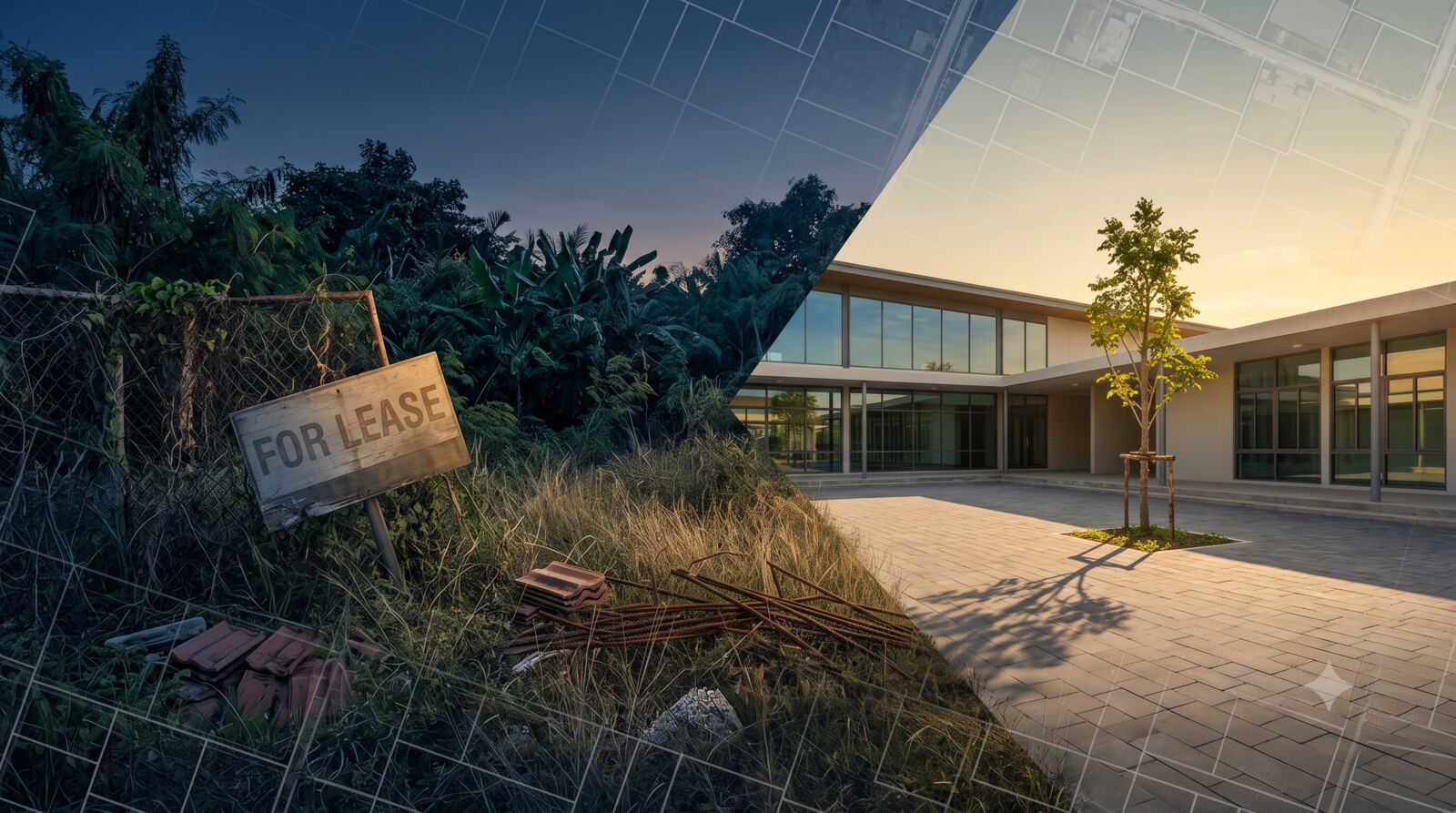
ICS didn't open as the polished K-12 institution its current students know. It began as a 1981 homeschool-style cooperative started by expatriate missionary families who wanted their children educated "from a biblical worldview," according to the school's own history page. It took until 1990 for those families, working with the Network of International Christian Schools, to commit to building an actual K-12 school, and until August 1993 to open its doors, on a leased plot in Bangkok's Sathon district that, as Fusazi put it, "used to be a snake farm and then it became a Chinese Christian school" that sat vacant for years before ICS could lease it. It welcomed 120 students.
Fusazi, who has held nearly every job a small school can hand one person over 30 years (teacher, coordinator, curriculum lead, deputy director, even school nurse) before becoming elementary principal, remembers the physical reality of those first years bluntly: "No air con, no computers, open air, lots of mosquitoes," a third-grade class of 22 students, some with no English, fighting off bites while ceiling fans blew papers off their desks. The playground was "filled with cement debris and nails," and the bathrooms were squat toilets until the school could afford to redo them. None of it stopped enrollment: within a decade the original site was packing roughly 500 students onto what Fusazi called a two-rai campus, a little under an acre, tight enough that "we had to schedule every minute."
The Land Gamble That Built Bangna
Getting out of that bind meant a real financial bet. The school board looked at roughly 40 possible sites before settling on a plot in Bangna that was "the largest and the most reasonable," and the foundation bought it by taking out a bank loan, a risk that paid off almost immediately. "Just a few months later, the value of the land increased, almost doubled and then tripled," Fusazi said. That loan bought a 16.2-rai campus, roughly eight times the size of the old site, which opened in September 2004 with close to 500 students. For three years the school ran both campuses at once before closing the original Sathon site in 2007, by which point it was averaging only around 65 students, even as families kept saying they missed "the so cozy home feeling of the small campus." ICS today enrolls more than 1,000 students from over 22 nations on that same Bangna land, according to the school.
A Boom That's Running Out of Room in the Capital
That trajectory, a scrappy, undercapitalized start growing into a thousand-student campus, has effectively been the story of Bangkok's international-school sector for three decades, and the sector as a whole is only now hitting a wall the way ICS did in the early 2000s. Thailand's international schools have nearly tripled since 2014, when roughly 100 schools enrolled fewer than 50,000 students; by 2025 the country had about 275 schools teaching close to 93,000 students, the Bangkok Post reported. Kasikorn Research Center put the 2025 market at roughly 257 schools worth an estimated 95 billion baht, decelerating to about 9.7% annual growth, with only eight new schools expected to open, a sharp slowdown from the previous decade's pace.
The geography inside Thailand lines up with the ICS story directly. Between 2021 and 2025, Kasikorn's research found, international schools outside Bangkok grew at an average annual rate of 9.1%, while the number of schools in Bangkok itself shrank about 1.7% a year, as operators ran out of affordable land and pushed into Chiang Mai, Rayong, and Phuket instead. The exact problem ICS solved for itself in 2003, buying land before it was gone, is now the binding constraint on the whole capital. ICS already made its move a generation ago; newer entrants largely can't, a plausible piece of why a single Bangna campus, however large, is still turning families away 20 years after it opened.
Keeping the Mission by Choosing the People
Growth like that usually brings mission drift, and Fusazi was asked whether ICS had held its founding values across three decades of expansion. Her answer wasn't about curriculum. ICS earned accreditation from the Western Association of Schools and Colleges and the Association of Christian Schools International in 1998. It was about hiring. "The most important thing was who we hired, who worked here," she said. "If you don't have people, you have nothing... Without people, it's just a shell." She described one stretch where the school had to "pull back and reevaluate" whether it was still living up to its own standards, without naming specifics, but framed the fix the same way: get the hiring right, and the culture holds.
"If you don't have people, you have nothing."
The Two Seniors Who Never Left
The episode's second half made the same 30-year arc personal, through two graduating seniors, Austin and Patty, who enrolled at ICS in kindergarten and are leaving 13 and 14 years later, respectively, having never attended another school. That kind of continuity is unusual for the population ICS was built to serve. A 2022 review in Frontiers in Psychology put the global expatriate population at roughly 87 million as of 2021, typically changing schools every few years as families move. Austin and Patty sit at an edge of that population most expatriate kids never reach: one school, one community, from age four or five straight through graduation.
They noticed the same physical evolution Fusazi described: the school's new Arc athletics building, a renovated cafeteria, the uniform shift from skirts to pants, and an old elementary playground both remembered as flatly more dangerous. "This big cage thing that you would climb up on, and if you fell, you just fell," Austin said, "that was your problem."
The more striking material was personal. Austin described being hospitalized for two weeks at the start of sixth grade, missing the chance to meet his new classmates and teachers, and coming back to find one had organized the whole class to write him notes anyway, from people he'd never met. Patty said she was a closed-off, anxious kid afraid of "being goofy around people," and credited teachers who kept reminding her ICS was "a safe zone" for slowly changing that. Asked what they'd carry into adulthood, Austin pointed to something structural: at ICS, "every teacher knows our names, every administrator knows our names, asks how we're doing," a flat, low-hierarchy model of leadership he called "a good example." Patty named service, tracing a line from years of required community service to the senior capstone project, which she called "just an introduction for me to keep serving others in many ways."
What Comes Next
Fusazi's own wish list for ICS's next 30 years is telling: keep the Bible-based mission and the "Loving and Learning" motto intact, and get more land. "I'd love to have a bigger campus so we can have more students, because we have so many students wanting to come here and we have to say no to the majority of them," she said. It's the same problem she and the school board solved once already, with a bank loan and a bet on a plot in Bangna nobody else wanted at the time. Whether that trick works twice, in a capital where affordable land has become the scarcest resource in the entire sector, is the open question ICS enters its next three decades trying to answer.