 Students Incorporated
Community
How the Bill of Rights Became a Promise to the Whole World
ICS Bangkok students trace how the 1791 Bill of Rights became the blueprint for a 1948 global promise: that dignity belongs to everyone, not just citizens.
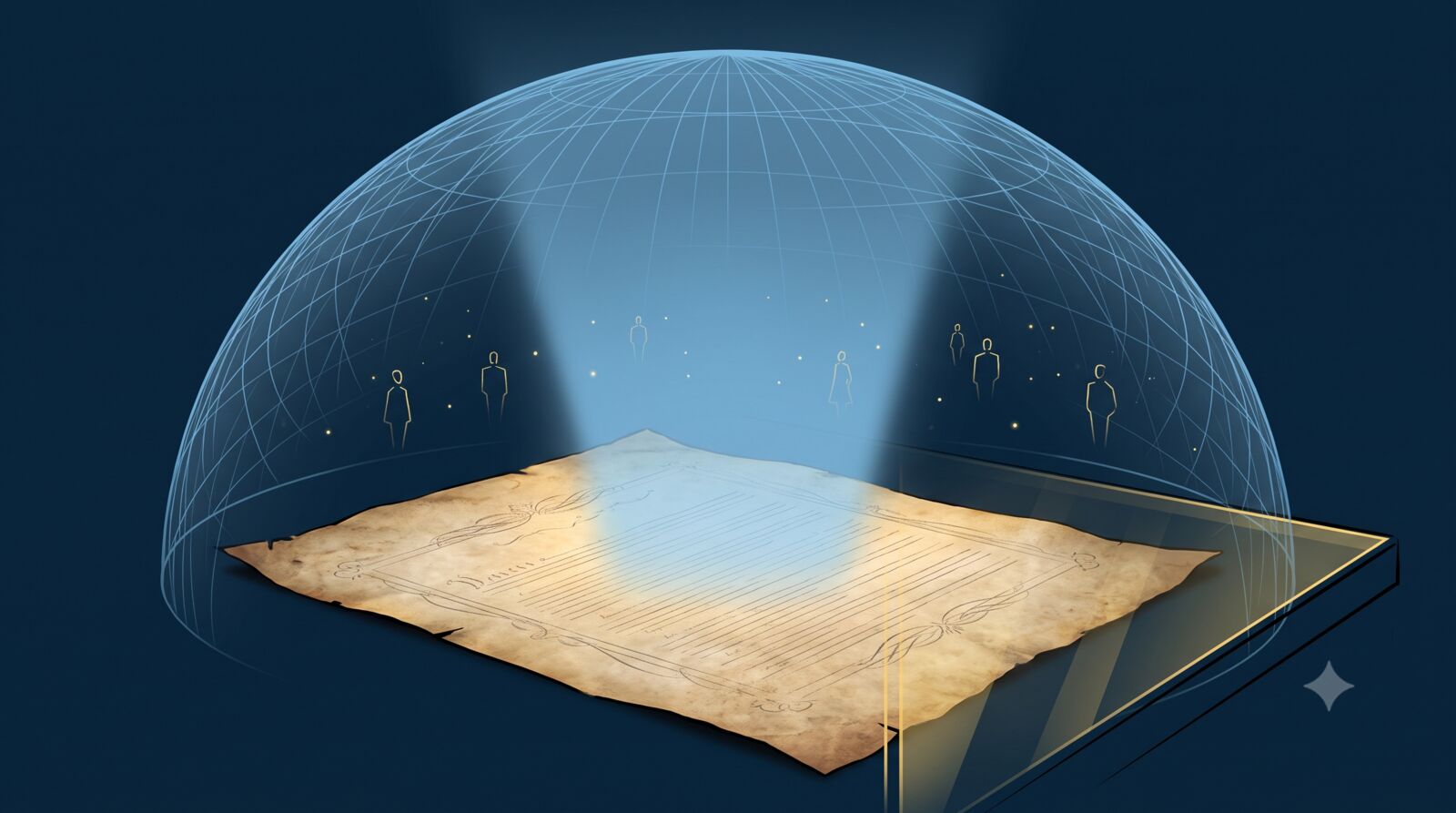
A list of things a brand-new government wasn't allowed to do to its own citizens, written in 1791, ended up 157 years later as the blueprint for a promise the entire world made to itself. That's the throughline host Mr. Jason, co-hosts Josiah and Proud, and student guests Sin Sin and Eunwoo built this Human Rights Day episode of the Students Incorporated podcast around: how a document meant to restrain one national government became one meant to protect every person on earth, and what any of that has to do with a Bangkok high schooler's actual week.
A List of Limits, Written After a Revolution
After the American Revolution, colonists who'd just fought off a monarchy were wary of handing that much power to anyone again, even a government of their own making. Josiah walked through the fix: the Bill of Rights, ratified in 1791, spelling out exactly what the new federal government couldn't do. Proud ran through the list: freedom of speech, religion, the press, and peaceful assembly in the First Amendment; the right to bear arms and a ban on forcibly housing soldiers in the second and third; then, from the Fourth Amendment through the Eighth, a run of protections built around the legal system itself: no unreasonable searches, a right to a speedy and public trial, no cruel and unusual punishment. The Ninth and Tenth close the list by making clear it isn't the whole list: people have rights beyond the ones written down. The document is built almost entirely out of restraint, and the First Amendment doesn't hide that structure: it opens with "Congress shall make no law."
Mr. Jason added a detail from his own life: he's seen the original Bill of Rights in person, on permanent display at the National Archives Museum in Washington, D.C., alongside the Declaration of Independence and the Constitution. More than two centuries later, it's still kept behind ballistic glass and armed security, a level of protection that says something about what the document is still worth.
A National Rulebook Becomes a Global One
When the UN Commission (driven in large part by Eleanor Roosevelt) sat down after World War II to draft a global human rights standard, the Bill of Rights gave them a working model: proof that a government could formally list out and protect a set of freedoms in writing. The commission adopted the Universal Declaration of Human Rights in December 1948, with 50 member states involved in the final drafting and eight nations abstaining from the vote. But the UDHR didn't just copy the American model onto the rest of the world. It expanded it. Where the Bill of Rights is a list of things a government can't do to you, the UDHR adds a second layer: things every person is owed simply by being human, including the right to education and health care. The hosts framed it as the biggest shift in the whole story: moving from a list that protects citizens against their own government to a vision of rights that exist simply because someone is human.
Where, after all, do universal human rights begin? In small places, close to home.
That's Eleanor Roosevelt, quoted at the top of the episode, and the line is doing real work: the same commission drafting a document meant to bind the entire planet believed the real test of it would be local: a classroom, a sports team, a home. Unless rights hold up there, she argued, they have little meaning anywhere.
The episode's other reference point came from Nelson Mandela: "To deny people their human right is to challenge their very humanity." Asked what that meant to him, Proud said rights "are not optional extras. They're at the very core of who we are. When people's rights are denied, whether it's the right to be safe, to learn, or to have a home, you're not just taking something away from them. You're saying that their life, their dignity, and their humanity are less valuable."
Two Words the Guests Had to Define
The UDHR's drafters described these rights with three specific words: universal, inalienable, and indivisible. The hosts put the first two directly to the guests. Universal, Sin Sin said, means "they are for everyone, everywhere. It doesn't matter your race, your religion, what country you live in, or how much money you have." Inalienable took Eunwoo a little more work ("I had to look this word up"), but the definition landed clean: rights that "can't be taken away, like no one can decide you don't deserve rights anymore. They are a permanent part of you just because you are a human being." The third word, indivisible, got named as part of the same trio but wasn't unpacked in the same way during the discussion.
Agreed On Paper, Uneven in Practice
Later in the episode, the conversation shifted from history to the present, and the guests were candid about the gap between agreement and enforcement. Asked why something so widely signed onto is still so hard to protect, one of them pointed to fragmentation: "every country has different laws, different governments, and different beliefs. So even if the rights are universal, the way they are respected or enforced changes a lot." Asked about common misconceptions, the answer pushed back on the idea that rights are only a matter of high politics: they "also include everyday things like being able to speak freely, access to water, or not being discriminated against."
The episode's headline news segment underlined the same point with real numbers. As reported by the Associated Press, a new report from the International Labor Organization found the steepest drop in global child labor on record: the number of children in child labor fell by nearly 20 million between 2020 and 2024, with the sharpest progress in South Asia and Sub-Saharan Africa. And yet, by that same report, roughly 138 million children are still engaged in child labor worldwide. The joint ILO-UNICEF report behind those numbers, published in 2025, put the scale of the remaining problem in stark terms of its own: at the current rate of progress, the world would need to move roughly eleven times faster to eliminate child labor within the next five years. Progress and shortfall, sitting inside the same statistic.
What Two Students Would Fix Right Now
Pressed on which global issue stands out to them personally, one guest named access to education, pointing out that "there are still so many kids around the world who can't go to school because of poverty, conflict, or discrimination," while the other pointed to safety, noting communities where "people don't feel safe in their own communities because of war, crime, or violence." Asked which single right the world should prioritize improving immediately, the two split again: one chose equality, arguing that "so many problems begin when people are treated unfairly because of their identity or background"; the other chose the right to a safe environment, pointing to "pollution, unclean water, and unsafe housing" as issues that "affect millions."
On what students specifically can do about any of it, Eunwoo put a finer point on the conversation: "raising awareness is a big one. If people don't know what's happening, they can't help fix it." Small, unglamorous, and, as the hosts agreed, step one.
The Idea Is Still Expanding
The episode's last headline story showed the concept isn't finished growing. As reported by the Associated Press, Ecuador's Constitutional Court recently expanded the country's constitutional "rights of nature" to include two of its largest Amazonian rivers, granting them legal standing so lawsuits can be filed on their behalf against pollution. It's a long way from a 1791 list written to protect citizens from their own government, but it's built on the same basic move the UDHR made in 1948: taking an idea meant for one narrow group and asking how far it can stretch.
The hosts closed by reading through ten of the UDHR's 30 articles (the right to life, freedom from discrimination, no slavery, food and shelter, equality before the law, privacy, freedom of movement, freedom of thought and religion, and free primary education among them) and pointed listeners to the full list at un.org. It brought the episode back to where Roosevelt's quote started: rights that mean nothing until they're actually lived out somewhere small and specific, a classroom, a home, a Bangkok podcast studio recording the day after Human Rights Day.