 Students Incorporated
Community
How an ICS Bangkok Team Turned a Crushing Loss Into a Title
A two-point loss nearly split ICS Bangkok's basketball team apart — research on athlete resilience explains why that night mattered more than the score.
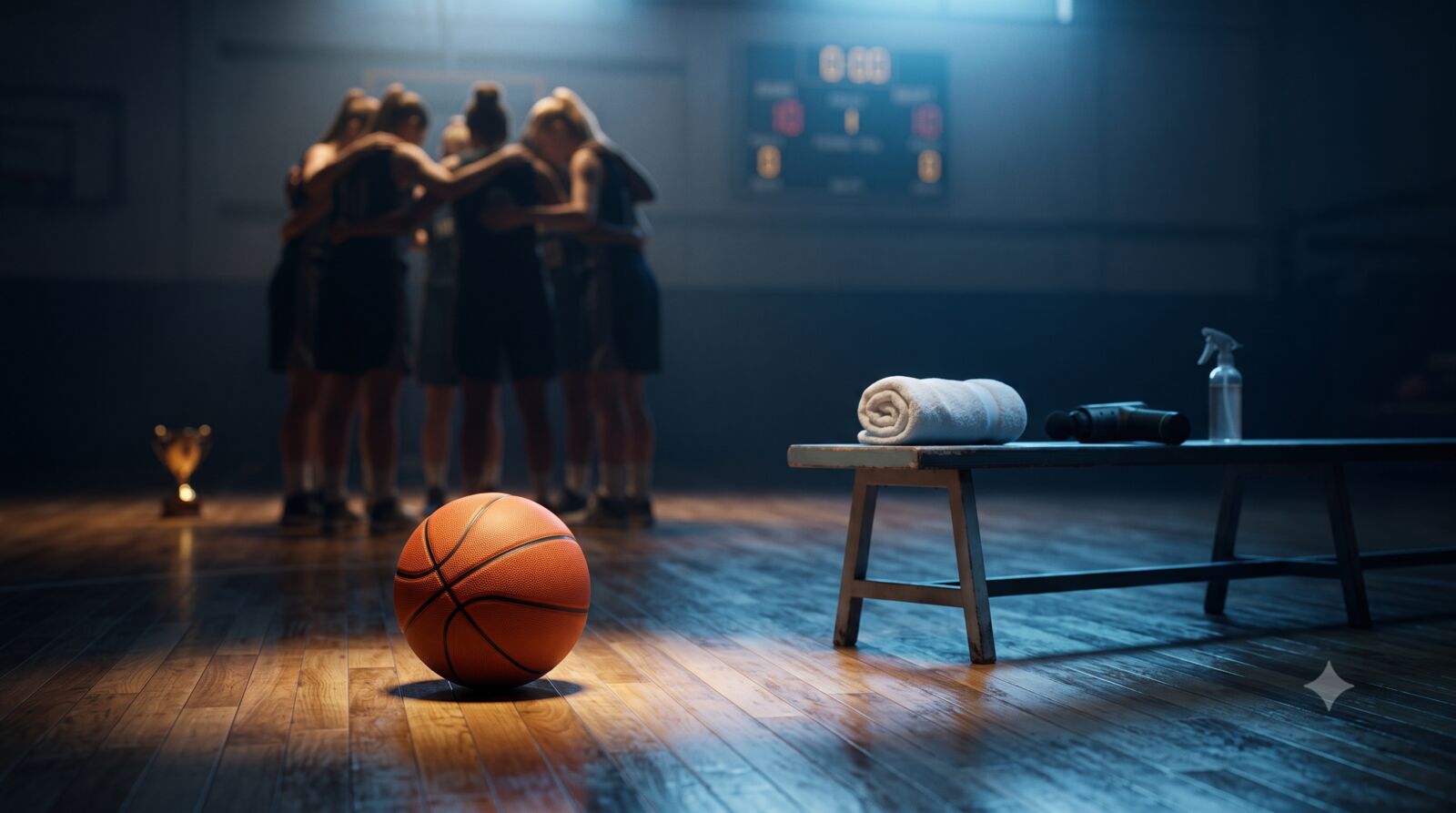
The International Community School of Bangkok's varsity girls basketball team lost by two points to Grace International School partway through the 2024 Asia Christian Schools Conference tournament in Hong Kong, and for a few hours afterward, the team itself nearly came apart with it. What pulled it back together, according to the players and coach who described the night on Students Incorporated, wasn't a tactical adjustment. It was a conversation. The next day, the team won four straight elimination games to take the title.
A Loss That Cost More Than a Game
The ACSC, founded in 2013 to give students at Christian international schools across Asia a shared circuit of basketball, volleyball, soccer, and track tournaments, draws eight member schools spread from Taiwan to Indonesia to South Korea. In 2024, the girls basketball tournament was hosted by International Christian School Hong Kong, and Grace International School's own recap of the event, published that March, confirms what ICS Bangkok's players described: Grace's varsity girls team made the final and finished second. That means the team ICS Bangkok beat by two points mid-tournament also went on to be the second-best team in the entire eight-school field, which is what made the loss so costly. Under the ACSC's bracket, winning ICS Bangkok's pool would have meant two more games. Losing meant four: one that same day, three more the next.
"Physically playing that many games is awful," Pun, a senior who plays post and wing, said on the podcast, describing a bench stocked with a massage gun and spray so players could keep moving between rounds. "Everyone was limping to the airport at the end." Proud, the team's senior point guard, put the schedule in perspective for anyone who has watched a professional league: "You're playing like three, four games a day when even professional players don't play that many games in one day."
That is not an exaggeration for effect. Research on congested-fixture basketball tournaments, including a peer-reviewed study of elite under-18 players published in Frontiers in Psychology, has tracked measurable physical decline across back-to-back tournament games, including reduced distance covered per minute and altered acceleration patterns, even in academy squads built specifically to survive that kind of schedule. A four-person ICS Bangkok rotation without that luxury, traveling between countries through four straight must-win games, was operating well outside what that research treats as a manageable load.
The Night the Team Almost Split in Two
The loss to Grace didn't just cost games. It fractured the locker room. "Our team actually kind of divided after this loss," Emma said. "It was really hard, and we even had a point where we were like, we're never coming back from this." Instead of a coach's speech or tactical fix, what turned it around was the team choosing to sit with the loss together that evening. "That afternoon we all came together and we just spent time together," Emma said. "We cried together. That evening we talked, and we figured it all out."
Sport psychology research on athlete resilience backs up what the players described as instinct rather than strategy. A 2025 narrative review of resilience research in competitive sport, published in the journal Frontiers in Psychology, found that social support from teammates and coaches is one of the most consistently documented factors in how athletes recover from setbacks, and that highly cohesive teams regulate stress under pressure better than less close-knit ones. The review's authors describe resilience less as an individual trait and more as something built collectively, in exactly the moment ICS Bangkok's players described: not glossing over a bad loss, but processing it together before moving past it.
Something that my volleyball coach told me was that you're as good as the worst player on your team.
Emma, who also co-captains the school's volleyball team alongside teammate Proud, connected the takeaway to something bigger than a single tournament. Playing on a roster with teammates from different cultural backgrounds, she said, had taught her to be "more culturally sensitive," a skill she expects to lean on again once she leaves ICS Bangkok's unusually international student body for a university that may not offer the same diversity. It's a smaller-scale version of what researchers who study "third culture kids," students raised across multiple cultures and common at international schools, describe as a genuine, transferable skill: the ability to bridge communication gaps between people from different backgrounds rather than assuming a single cultural default.
Two Coaches, Two Jobs, One System
If the players supplied the emotional recovery, the coaching staff supplied the structure that let it hold. Mike, ICS Bangkok's assistant coach, has been at the school for almost 15 years and has coached the girls basketball program since 2018, working alongside head coach Jack in a deliberately split role: Jack runs in-game strategy on the court, while Mike, as bench coach, manages substitutions, tracks fouls on both teams, and feeds his own read of the game back during timeouts. "It's really important for us as coaches to have clear principles and clear roles," Mike said, "because it helps us make sure that we don't have conflict with each other during the game."
That division has to be rebuilt every year, not just refined. With four seniors graduating, Mike said the team is losing "a lot of our post size, a lot of our rebounding, a lot of our defense by the rim," and next year's roster will force a faster, more up-tempo style than the current team's half-court game. It's a concrete example of a broader coaching principle Mike described: choosing a system to fit the players in front of you, rather than forcing personnel into a system that no longer matches the roster.
"Let Go of the Things You Can't Control"
The single piece of advice players cited most often traced back to Mike: focus only on what you can actually control. "The only thing that you can control is how you act on those things and respond to those things," Emma said, repeating a version of it that had helped her push past a tournament in which she wasn't playing her best. Sport psychologists have a name for exactly this mental habit: internal locus of control, the belief that outcomes are shaped by one's own actions and responses rather than luck, officiating, or an opponent's play. Research on the concept has found that athletes with a strong internal locus of control show greater resilience, motivation, and performance under pressure than those who default to blaming outside factors, matching how Emma described using the idea to reset mid-tournament instead of spiraling over a bad shooting night.
Proud, the team's point guard, offered her own coming-of-age story as proof the advice pays off over time, not just in a single game. The first time she made varsity full-time, as a freshman, she was unexpectedly subbed into the final of the NIST tournament, caught a pass while wide open, and turned to dribble toward the wrong basket before her head coach's shout stopped her. "I dropped the ball, it went out of bounds, and I got subbed back out right away," she said. Now a senior, she said she has spent this year "playing full games, scoring points, and really making a contribution to the team." Her advice to younger athletes was blunt: "Don't give up. I know that sounds cliché, but I genuinely mean it."
None of the players framed the ACSC title as proof their team was simply more talented than seven others in the region. They framed it as proof that a group willing to fall apart in front of each other for one night could be trusted to hold together for four straight elimination games the next day, a distinction the research on team resilience suggests matters more than any single starting lineup.