 Students Incorporated
Community
How a Facebook Post Turned an ICS Teacher Into a Bandleader
Christopher Weeden felt isolated after moving to Bangkok, so he posted on Facebook for bandmates — and found what research says expats often lack.
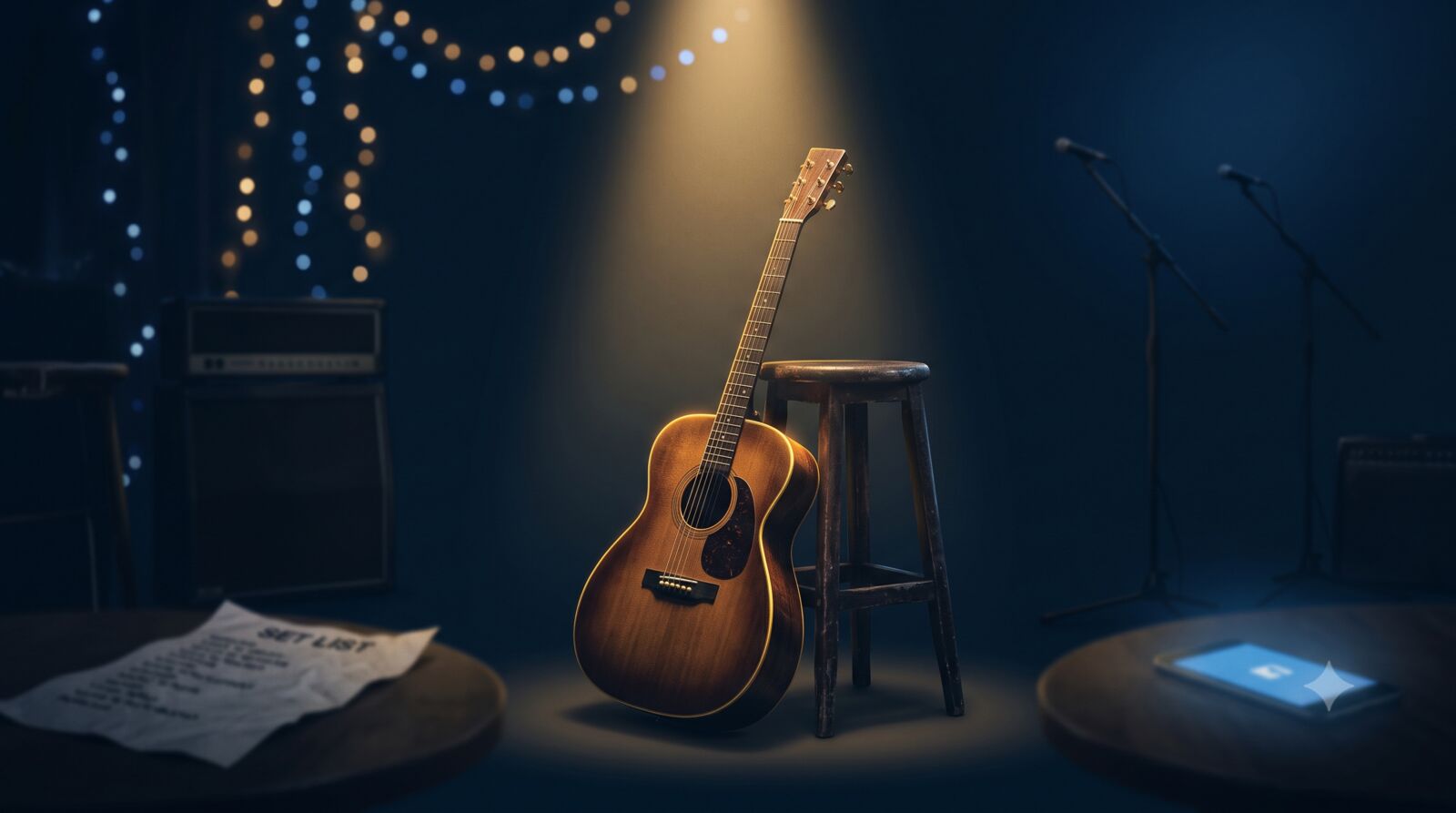
Christopher Weeden had been in Bangkok only a few months, teaching middle school art at the International Community School of Bangkok, when he decided the fastest way out of feeling isolated was to start a band with total strangers. He didn't know any working musicians in the city, so he posted a callout on Facebook describing the kind of band he wanted to play in and waited to see who answered. A handful of guys did. Within a year, that Facebook post had become Lone Star Lament, a Texas indie-folk and country outfit that plays regular shows around the city. By Weeden's account on the Students Incorporated podcast, the band had just drawn its biggest crowd yet: about 40 people packed into a room to hear a Houston transplant play covers of the music he grew up on.
"We just kind of moved to Bangkok, and I wasn't really connecting and finding friends," Weeden told co-hosts Premi and Rebecca. "I always wanted to do a band, so I was like, I'm just gonna do it."
A Facebook Post and a Room Full of Strangers
The break came almost by accident. Weeden was at a show at a venue called Speaker Box, watching a Thai band called Wicked Lights (he described them as a Thai version of Bon Iver), when he struck up a conversation with the venue's owner. Lone Star Lament existed mostly on paper at the time, just Weeden and one other committed member, but he mentioned the band anyway. The owner told him that if he ever wanted to play there, just say the word. Weeden took it as a sign to stop planning and start booking. The band has since settled into a rhythm of about one gig a month, working through cover songs while they learn to play together, with original material still ahead.
It's a small, specific story (a teacher, a Facebook post, a chance conversation at a bar), but it maps closely onto something researchers who study relocation and expatriate life keep finding: the hardest part of moving abroad usually isn't the move itself. It's rebuilding a social life from zero once you land.
The Isolation Behind the Story
International schools like ICS run on transplants. Teachers arrive on multi-year contracts, often without an existing network there, and the same conditions that make the work appealing (a new culture, a new city, a fresh start) are also what make it isolating. A Pearson International Schools analysis notes that expatriate teachers face isolation on two fronts, professional and personal, and that those who don't build new social networks in their host country are more likely to experience loneliness, depression, and anxiety. Research on international-school turnover points to the same pattern: schools with high attrition tend to be the ones where new arrivals never quite plug into a community, and the transient nature of the industry (contracts end, people leave, the cycle restarts) makes it harder to form the friendships that would otherwise buffer against it.
InterNations' 2026 Expat Insider survey, drawn from tens of thousands of people living outside their home countries, backs this up: making friends and adjusting to a new culture are among the toughest parts of expat life, and a language barrier is the most commonly cited obstacle to socializing, reported by 43% of respondents. Sociologists have a term for what's often missing: a "third place," an informal gathering spot (a bar, a rehearsal room, a regular gig) outside home and work, where acquaintance turns into belonging. The concept dates back to sociologist Ray Oldenburg's research decades ago and has resurged as researchers track what's disappeared from American, and increasingly expatriate, life. A study on community music programs published in the journal PMC found measurable drops in social, emotional, and existential loneliness among participants, meaning the effect isn't just feeling less bored, but something closer to what Weeden describes: feeling like you belong somewhere again.
Weeden didn't set out to test any of that. He just knew he was lonely, he liked music, and Facebook was free.
From Houston Cassette Tapes to a Bangkok Stage
Weeden's relationship with music started long before Bangkok, and it wasn't a straight line. Growing up in Houston, he won a gold medal in a UIL music-memory competition in elementary school (the kind that requires naming both a symphony and its composer after hearing a few bars) and spent his school years playing tuba, trombone, and baritone in marching band. He never took a music class in high school, though, a choice he still calls one of his biggest regrets, since it left him playing by ear without ever learning formal theory or songwriting technique. He didn't even know he could sing until he was 21, when friends dragged him into a karaoke room while waiting for a concert to start. A stranger complimented his pitch afterward, the first hint he'd had that he could actually sing.
His taste ran from Texas country (George Strait, Willie Nelson) through a high school punk and metal phase and into what he calls his favorite era for music: the early-2000s indie explosion built around labels like Saddle Creek, with bands like Bright Eyes, Rilo Kiley, Death Cab for Cutie, and the Postal Service. That era sent him to Coachella eight times starting in 2004, when he and friends drove the roughly 22 hours from Houston to camp in the California desert. Across those trips he watched the Cure play a greatest-hits set of songs they hadn't performed live in 20 years, saw the Pixies reunite after a decade and a half apart, and caught Radiohead play "Creep," a song the band is famously sick of, with Thom Yorke visibly needling through it. "It was hilarious," Weeden said.
Where Art and Music Meet
Weeden's day job and side gig run on the same rule: as an art teacher, he tells his students that a piece has to mean something to them personally or it won't get finished. He estimates he has roughly a hundred half-finished artworks in his portfolio, abandoned when he lost the emotional thread. Songwriting works the same way for him: he starts with words, treating lyrics like the poetry he wrote when he was younger, then hunts for a chord progression and hums or sings a melody over it, recording himself so he can piece the fragments together later, "almost like a puzzle." The hardest part, he said, isn't the words or the chords individually. It's building the dynamics that make a listener actually feel what the song describes, rather than just hear it described.
"Misery brings us together."
That's the idea Weeden said sits at the center of Lone Star Lament: songs with a tinge of sadness, honest about the parts of life that don't resolve neatly. It's why the band closed its studio segment on the podcast with Jason Isbell's "If We Were Vampires," a ballad about a marriage that both partners know won't outlast them. Isbell wrote the song about his own relationship with musician Amanda Shires, who sings harmony on the recording; it went on to win the 2018 Grammy for Best American Roots Song. Weeden framed the premise plainly for the studio: a beautiful marriage, a finite amount of time in it, and eventually, one person left behind.
It's a heavier note than "guy starts a band to make friends" usually lands on, but it fits how Weeden talks about music generally: not background noise, but the thing that makes an ordinary Tuesday, or a lonely first year in a new country, feel like it mattered. He didn't need a study to tell him that showing up to a bar once a month with people who now know his name would help. He just needed a Facebook post.